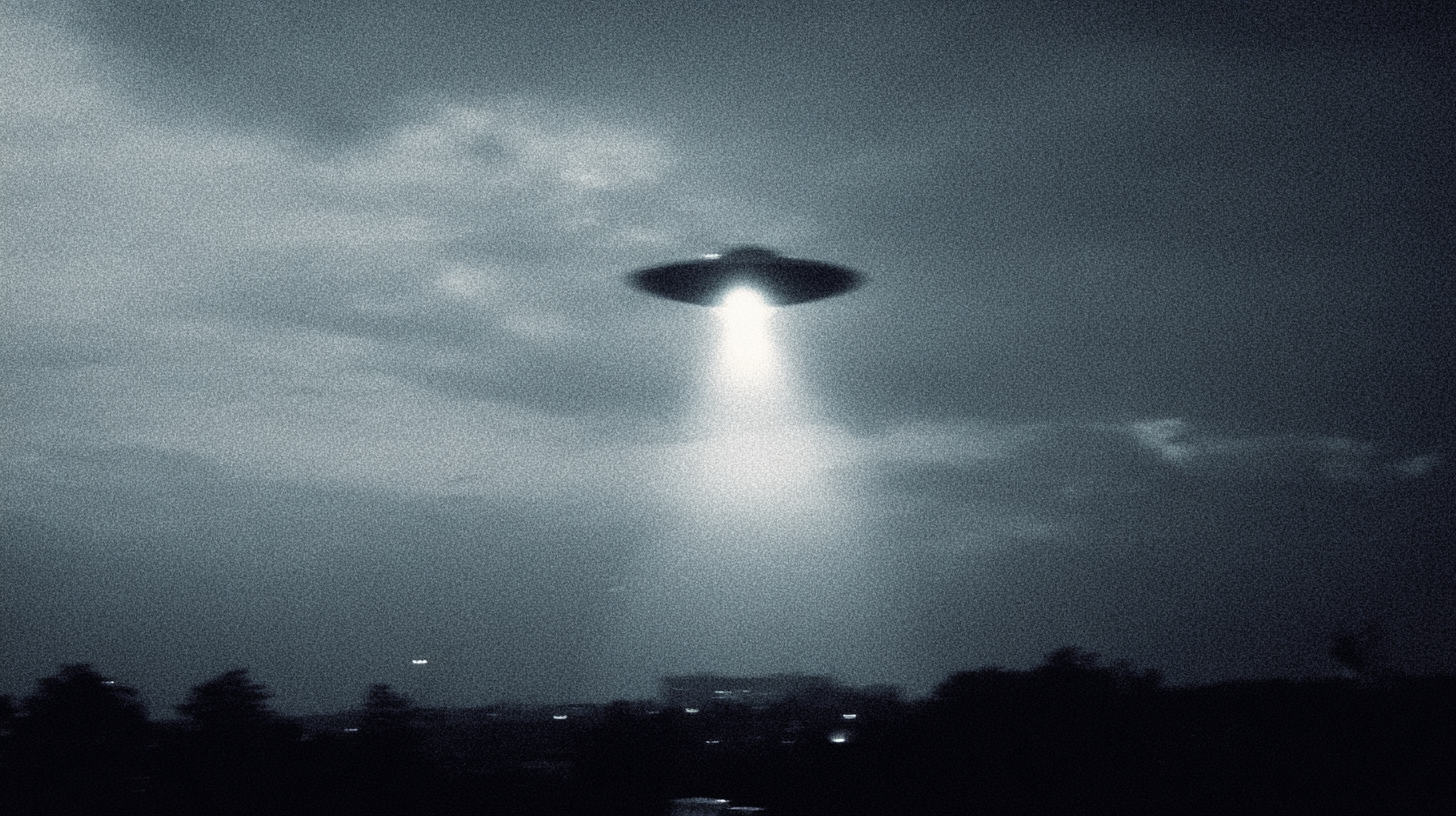
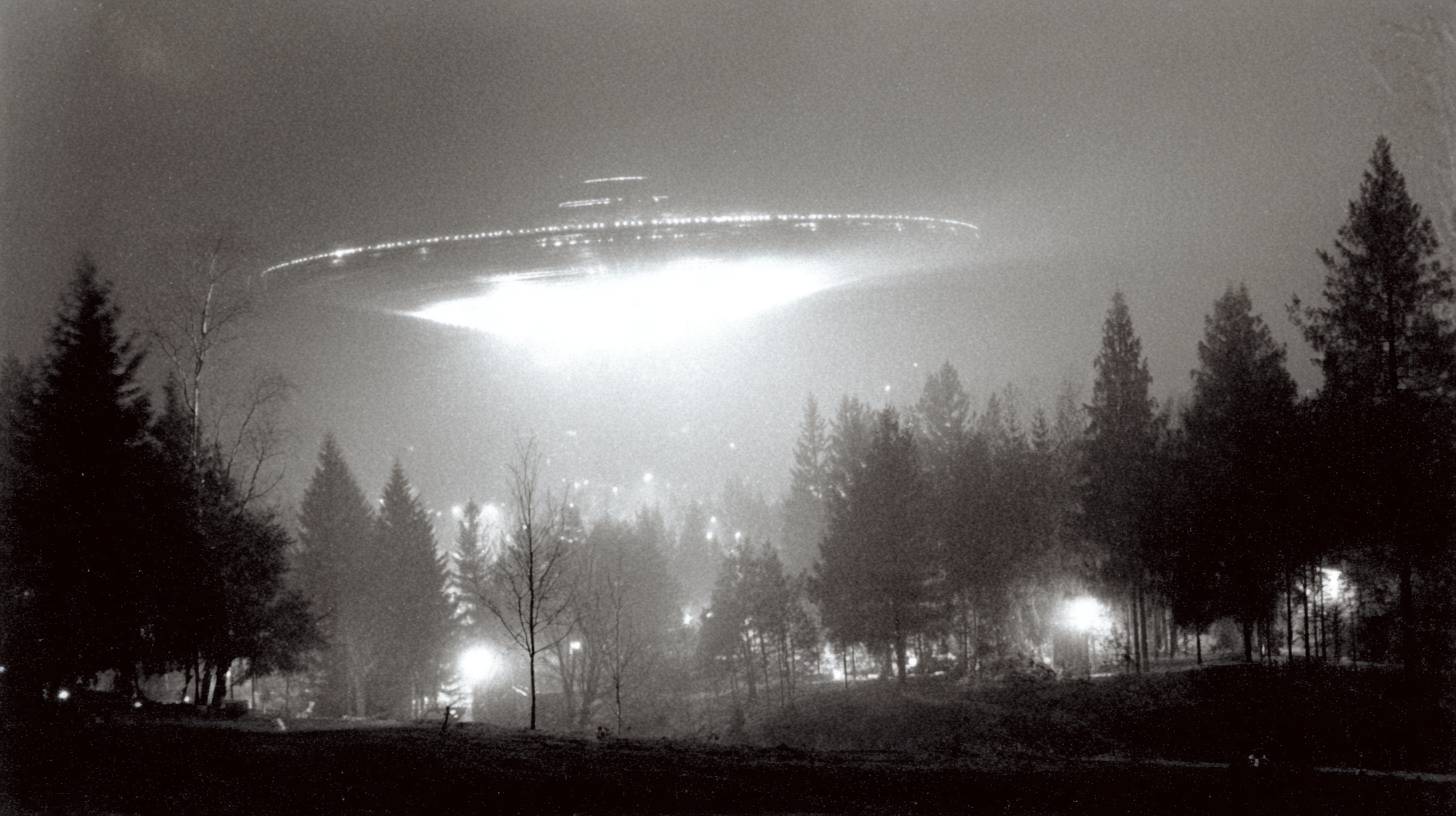
How to Spot and Report UFO Activity
Want to join the UFO-watching community? Here’s a quick guide to get you started:
- Know what to look for:
- Unusual shapes: discs, cigars, triangles, spheres
- Strange movements: rapid acceleration, sudden stops
- Unexpected lights or colors
- Get the right gear:
- Binoculars
- Camera with tripod
- Smartphone with sky-watching apps
- Pick the best spots and times:
- Dark, clear skies away from city lights
- Areas known for UFO sightings (e.g., Roswell, NM)
- Record sightings properly:
- Note date, time, location, duration
- Describe shape, size, color, movement
- Take photos or videos if possible
- Report your sighting:
Remember: Most UFOs turn out to be everyday objects. Stay curious but skeptical!
| Common UFO Shapes | Often Mistaken For |
|---|---|
| Disc | Lenticular clouds |
| Cigar | Airplanes |
| Triangle | Military aircraft |
| Sphere | Planets (e.g., Venus) |
| Boomerang | Flocks of birds |
Keep your eyes on the skies, but your feet on the ground. Happy UFO hunting!
Getting ready to spot UFOs
Want to spot a UFO? You’ll need the right gear and know-how. Here’s what you need:
Tools for sky watching
Your UFO-spotting kit:
- Binoculars: Wide view, often with night vision
- Cameras: For proof. Use tripods
- Smartphone: Apps like SkyView help ID objects
Best places and times to look
The American West is UFO central. Why? Dark skies, open spaces, and military sites nearby.
Top spots:
- Roswell, New Mexico: UFO capital
- Nevada’s Extraterrestrial Highway: Lots of sightings
- Rachel, Nevada: Home of the Little A’Le’Inn
For best viewing:
- Find dark skies
- Pick clear nights
- Be patient
Knowing common sky objects
Many “UFOs” are just misidentified objects. Watch out for:
| Object | Looks like | Real-life example |
|---|---|---|
| Venus | Bright light | Often mistaken for UFO |
| Lenticular clouds | Flying saucers | Lens shape fools people |
| Balloons | Light clusters | 2010 Manhattan sighting was silver balloons |
| Drones | Moving lights | Now a top UFO explanation |
Even experts get it wrong. In 2015, astronaut Tim Peake thought he saw UFOs from space. Nope, just urine crystals from a Russian probe.
How to spot a UFO
Spotting a UFO isn’t easy. Many things in the sky can fool you. Here’s how to tell if you might be seeing a real UFO:
What UFOs look like
UFOs come in different shapes and sizes. Common types:
| Shape | Description | Notable sighting |
|---|---|---|
| Disc | Round, flat bottom, domed top | Kenneth Arnold, 1947: 9 crescent-shaped objects |
| Cigar | Long, narrow, no wings | Yukon Territory, 1967: Massive hovering craft |
| Triangle | Large, silent, lights at corners | Belgian UFO wave, 1989-1990: Hundreds of witnesses |
| Sphere | Glowing ball of light | Often seen moving erratically |
| Boomerang | V-shaped, lights along edges | Phoenix Lights, 1997: Thousands of witnesses |
UFOs often move in weird ways. Fighter pilot David Fravor said about the USS Nimitz incident:
“It was so unpredictable—high g, rapid velocity, rapid acceleration.”
Things people mistake for UFOs
Before you get excited, rule these out:
1. Aircraft
- Steady moving lights
- Flashing green or red lights
- Very bright white lights
2. Satellites
- Steady moving light high up
- No flashing, moves slowly
3. Celestial objects
- Venus: Bright light, doesn’t move
- Jupiter: Also very bright
- Meteor: Fast-moving, leaves trail
4. Other stuff
- Chinese lanterns: Orange flickering light, low altitude
- Searchlights on clouds: Strange diffuse lights
- Lens flares: Can look like spacecraft in photos
Here’s the thing: About 90% of UFO reports turn out to be everyday objects. Jonathan McDowell, astrophysicist at Harvard & Smithsonian, says:
“Venus is the classic UFO.”
To avoid mistakes, use sky-watching apps and websites like heavens-above.com to track satellites and identify stars and planets.
If you see something weird, note its:
- Shape
- Size
- Color
- Movement
- Sound (or lack of)
If it doesn’t match known objects and acts strange, you might have spotted a real UFO.
Recording UFO sightings
Spotted something strange in the sky? Here’s how to document it like a pro:
How to observe carefully
When you see a potential UFO, record these details:
- Date, time, and exact location
- How long you saw it
- Object’s shape, size, color, and any lights
- How it moved and if it changed
- Any sounds (or lack of)
- Effects on surroundings or electronics
- Other witnesses
Pro tip: About 90% of UFO reports are just everyday objects. Use sky-watching apps to rule out the usual suspects.
Taking photos and videos
Want to capture that UFO? Here’s how:
1. Use the best camera you’ve got
Your phone works, but a DSLR is better.
2. Set up fast
- DSLR: Infinity focus, high shutter speed
- Increase ISO for dark conditions
3. Keep it steady
Use a tripod or find a stable surface.
4. Show scale
Include landmarks or objects for size comparison.
5. Take lots of shots
Try different settings to get at least one good image.
6. Go for video too
Even shaky footage can be useful.
7. Keep it real
Turn off filters and AI enhancements on your phone.
“If you’re trying to capture a UFO, it could be difficult if it’s spontaneous and you’re an amateur.” – Jake Kivanc, Digital Photo Whiz
NASA’s working on an app to help regular folks record UFOs better. Dr. David Spergel, President of the Simons Foundation, says:
“My hope is that an app would create a set of public data, and then citizen scientists could go through it and see what’s there.”
Until then, focus on clear, unedited images and videos. And don’t forget to back up your files right away!
How to report a UFO
Seen something weird in the sky? Here’s how to tell someone about it:
Where to report UFOs
Two main groups take UFO reports:
- National UFO Reporting Center (NUFORC)
- Website: nuforc.org
- They collect and share UFO info
- Anyone can report
- All-Domain Anomaly Resolution Office (AARO)
- Website: aaro.mil
- They look at UAPs for national security
- Only for U.S. government workers, military, and contractors
Steps to make a report
1. Get your facts straight
Write down:
- When and where you saw it
- What it looked like
- How long you saw it
- What the weather was like
- Any pictures or videos you took
2. Pick where to report
If you’re just a regular person:
- Use NUFORC’s online form
- Call them if it’s urgent
If you work for the government or military:
- Use AARO’s online form (coming fall 2024)
3. Fill it out
- Put in all the details you can
- Stick to what you saw, not what you think it was
- Add any pictures or videos
4. Keep in touch
- Save your report number
- Be ready to answer more questions later
“We should encourage more reporting, not less on UAPs. The more we understand, the safer we will be.” – Democratic Rep. Robert Garcia of California
MUFON (Mutual UFO Network) also takes reports and lets you stay anonymous. They even have a special team for alien abduction stories.
Digging Deeper into Your Sighting
Reported a UFO? Here’s how to investigate further:
Research Tools
- MUFON Database: Join MUFON to access their UFO sightings database. Compare your experience with others and look for patterns.
- NUFORC Report Index: Search the National UFO Reporting Center’s database for similar sightings in your area or timeframe.
- UFO Stalker: Check out this interactive map showing global UFO sightings. Spot activity clusters near you.
Connecting with UFO Enthusiasts
Join MUFON for:
- Monthly e-journals with UFO news
- MUFON TV access
- Live expert symposium streams
Want hands-on experience? Become a MUFON Field Investigator. You’ll learn to:
- Conduct ethical investigations
- Use the Field Investigator Manual
- Contribute to global UFO research
Visit the International UFO Museum in Roswell, NM for:
- UFO exhibits
- Firsthand sighting accounts
- Meetups with fellow enthusiasts
Share your story on forums like Above Top Secret or Reddit’s r/UFOs for community feedback.
Remember: Stay objective, be open to explanations, and protect your privacy online.
Join the Other Worlders discord! We offer:
- Like-minded community
- Friendly and engaging chats
- Meet fellow enthusiasts
Wrap-up
Let’s wrap up our UFO spotting and reporting guide. It’s all about balance: stay curious, but keep your feet on the ground.
Open-minded, but careful
Here’s the deal with UFOs: most turn out to be everyday stuff we’ve misidentified. The Pentagon even said they’ve found no alien tech in UFO sightings since 1945. But that doesn’t mean we should ignore all reports.
Want to help UFO research without losing your head? Try this:
- Use legit tools like the National UFO Reporting Center database
- Describe what you see in detail, but stick to the facts
- Consider non-alien explanations
- Don’t jump to conclusions without solid proof
Even the pros can get caught up in the hype. Barry Markovsky, a sociology expert, puts it this way:
“Being averse to ambiguity, people want answers. However, being highly motivated to find those answers can bias judgments.”
So keep your eyes on the skies, but your mind clear. Who knows? You might just spot something truly unexplainable.