Shag Harbour UFO Incident: Canada’s Roswell
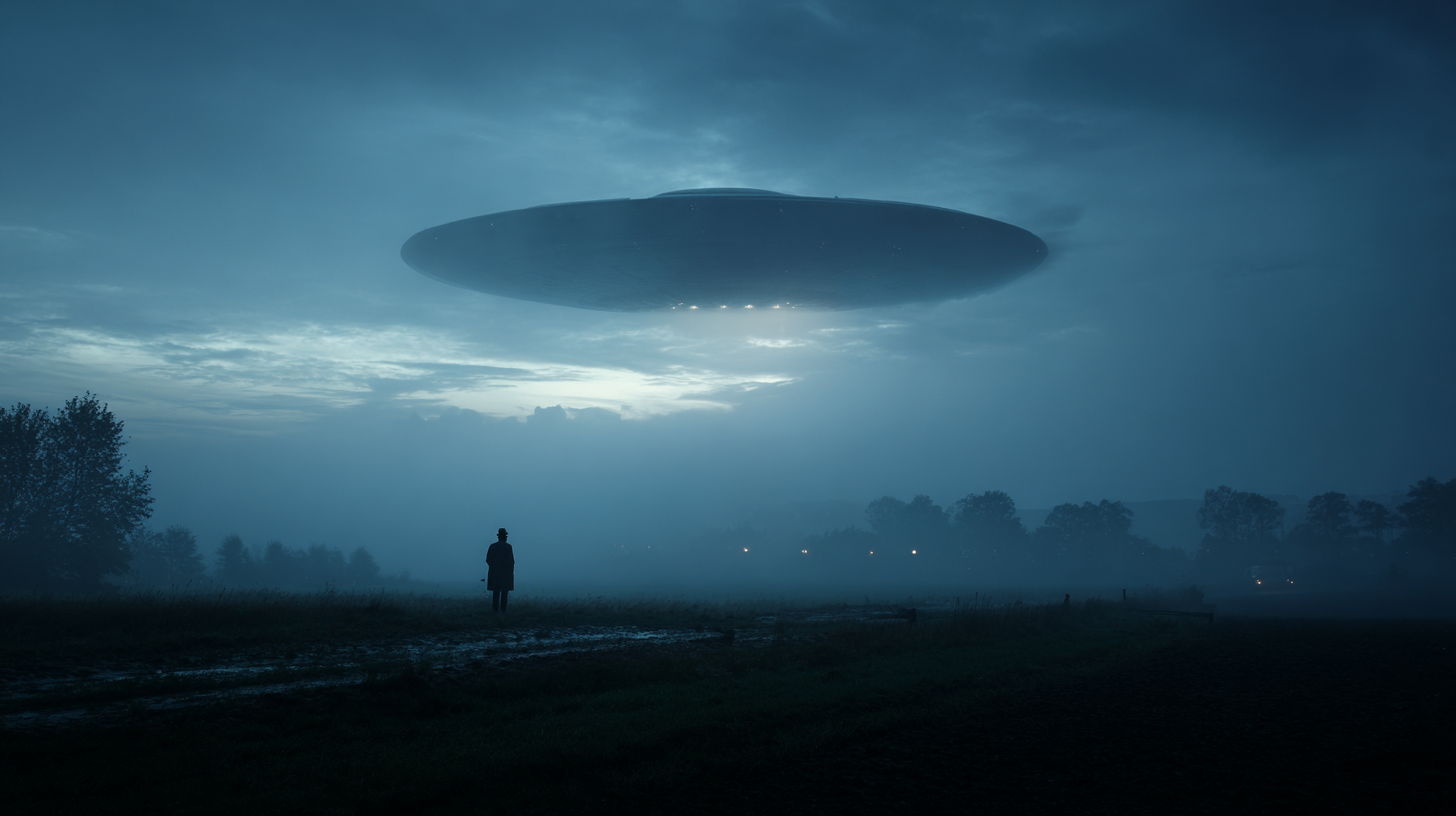
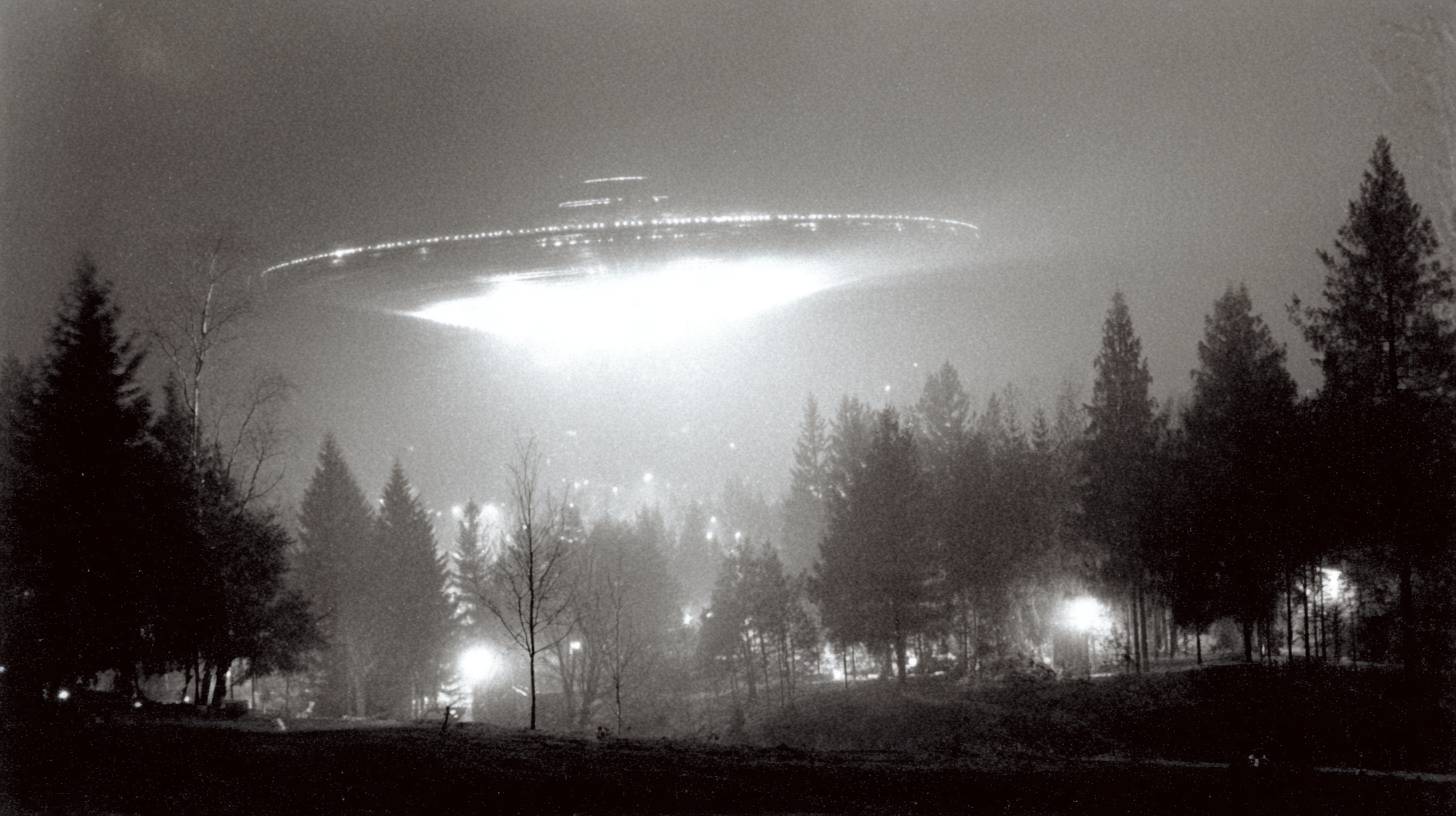
On October 4, 1967, something extraordinary happened off the coast of Shag Harbour, Nova Scotia. A glowing orange object, about 60 feet wide, fell from the sky into the water, witnessed by multiple locals, including Laurie Wickens and his friends. Believed at first to be a plane crash, the incident triggered a rapid response from the RCMP, Coast Guard, and military, but no wreckage or debris was found – only a strange yellow foam floating on the surface.
Here’s why this event stands out:
- Official UFO Label: Government documents referred to the object as a "UFO", a rare acknowledgment.
- Mass Witness Accounts: At least 11 people saw the object descend.
- Physical Evidence: Yellow foam was observed at the crash site.
- Thorough Investigation: Navy divers and multiple agencies searched the area for days, uncovering no conventional explanation.
Unlike the Roswell incident, Shag Harbour’s case has extensive official documentation and eyewitness testimony, making it one of North America’s most puzzling UFO events. Decades later, the mystery remains unsolved, continuing to draw researchers and visitors to the Shag Harbour UFO Interpretive Center.
| Quick Comparison | Shag Harbour (1967) | Roswell (1947) |
|---|---|---|
| Location | Coastal waters | Desert terrain |
| Initial Report | UFO/plane crash | Weather balloon |
| Physical Evidence | Yellow foam | Debris field |
| Witness Access | Many still alive | Most deceased |
What really happened that night? The answer remains a mystery, but Shag Harbour continues to captivate UFO enthusiasts and skeptics alike.
The 1967 Shag Harbour UFO Incident: Unveiling Underwater Mysteries
Event Background and Timeline
Back in 1967, Shag Harbour was a quiet fishing village with a population of about 400-450 people. The local economy revolved around lobster fishing, which ran from November to May. The area was also steeped in maritime traditions and stories, adding a layer of intrigue to its history.
Initial Sighting: October 4, 1967
On the night of October 4, 1967, something extraordinary happened. At 11:20 PM Atlantic Daylight Time, several residents spotted a strange, glowing object descending toward the waters near Shag Harbour. At least eleven people witnessed the event, including Laurie Wickens and four of his friends. The object emitted a series of flashing lights that immediately grabbed their attention.
"There was four (lights) in a row, and they were going on and off. One would come on, then two, three and four — and they’d all be off for a second and come back on again."
As the object descended, it eventually came to rest about 820 to 985 feet offshore. Witnesses reported hearing distinct sounds: first a whistling noise, then a "whoosh", and finally a loud bang as it hit the water. The dramatic nature of the incident spurred an immediate response from the local community and authorities.
Local Response
The people of Shag Harbour wasted no time reacting to what they initially thought was a plane crash. Laurie Wickens quickly called the Royal Canadian Mounted Police (RCMP) to report the incident:
"We went right to the phone booth and called the RCMP and reported a plane crash, and he didn’t believe me [at first] so I hung up."
Within 15 minutes, RCMP officers were on the scene. The response effort grew rapidly and included:
- Local fishermen launching boats to search the area.
- Deployment of a Canadian Coast Guard search and rescue cutter.
- A three-day underwater search by Royal Canadian Navy divers.
A Defense Department memo later added to the mystery, stating:
"A preliminary investigation has been carried out by the Rescue Co-ordination Centre in Halifax. It has been determined that this UFO sighting was not caused by a flare, float, aircraft or in fact any known object."
Shag Harbour vs. Roswell
When compared to the Roswell incident of 1947, the Shag Harbour case stands out for its unique characteristics:
| Aspect | Shag Harbour (1967) | Roswell (1947) |
|---|---|---|
| Location Type | Coastal waters | Desert terrain |
| Initial Report | Aircraft crash | Weather balloon crash |
| Physical Evidence | Yellow foam trail | Debris field |
| Official Documentation | Extensive government records | Limited military reports |
| Witness Access | Multiple civilian witnesses still alive | Most witnesses deceased |
| Official Classification | Officially labeled "UFO" in government documents | Initially "flying disk", later "weather balloon" |
"I can’t tell you what came down or what landed in the water – if it was a plane or if it was a UFO, I don’t know – but there definitely was something that came down out of the sky and landed in the water. I can still see it. I’d like to see it again, I really, really would. [But] I don’t know what it was and I probably never will."
Witness Reports and Official Response
Main Witness Statements
The Shag Harbour incident drew attention from numerous witnesses, including Ralph Loewinger, a commercial airline co-pilot. He described seeing "a formation of bluish-white lights slanted from upper left to lower right." Initially, he thought it might be a large aircraft, such as a B-52 or 707, with about five lights visible.
Other witnesses reported a glowing orange sphere, roughly 60 feet in diameter, hovering between 820 and 985 feet offshore. The object descended with a series of flashing lights before hitting the water. Norman Smith, among others, tracked the lights as they descended, further supporting the accounts of an unidentified object entering the water.
These detailed observations sparked immediate action, leading to a multi-agency investigation.
Military and Government Actions
Once eyewitnesses confirmed the descent of an unknown object, Canadian authorities coordinated efforts across several agencies to investigate.
| Agency | Action Taken | Results |
|---|---|---|
| RCMP | Conducted the initial investigation | Confirmed the presence of an unknown object |
| Rescue Coordination Centre | Reported findings to Canadian Forces HQ | Classified the object as being of "unknown origin" |
| NORAD Radar (Baccaro) | Performed radar analysis | Detected no conventional aircraft |
| HMCS Granby | Navy divers conducted underwater searches | Search efforts continued until October 8, 1967 |
Colonel W. W. Turner issued an official statement, noting:
"The [illegible] Co-ordination Centre conducted preliminary investigation and discounted the possibilities that the sighting was produced by an aircraft, flares, floats, or any other known objects."
Coast Guard Search Results
Captain Ronnie Newell, who participated in the search, recounted:
"We searched that night on the ocean, pretty much the whole rest of the night [but] we didn’t see anything… Other than the foam that was on the water – but that’s all we did see."
At the impact site, searchers discovered a distinctive patch of yellow foam:
- Width: At least 80 feet
- Area: Roughly 120 by 300 feet
- Appearance: Yellowish-orange in color, with a thickness of 4 to 6 inches
Despite three days of thorough investigation, the Navy found no additional evidence and concluded their search. The Shag Harbour case was later documented as Case #34 in the Condon Committee Report, cementing its place in UFO investigation history.
Possible Explanations
After extensive investigations and numerous eyewitness accounts, several theories have been proposed to explain the Shag Harbour incident. However, no conventional explanation has fully accounted for all the evidence.
UFO Theory
The UFO theory remains a leading explanation for the Shag Harbour event, bolstered by credible witness testimonies and official records. Notable physical evidence, such as the mysterious yellow foam observed at the crash site, has yet to be explained by traditional means.
Witness Norman Brown shared a compelling account that supports this theory:
"That same night [on October 4] – or it may have been the night before or two nights before – it sounds very much exactly like the spacecraft or UFO that we saw. I firmly believe it was either the same craft, or if there was more than one, it was one that was with them at the time… I have no idea what was manning it, or where it was from, but I can tell you that it was no kind of a spacecraft that the Canadian or US Navy or Air Force could have had at that time."
Adding to the mystery, diver David Cvet reported discovering unusual underwater anomalies at the crash site. These findings suggest the possibility of advanced technology, far beyond what was available in the 1960s.
Military Tests and Space Debris
Another explanation ties the incident to Cold War-era military activity. The crash site was located near a U.S. military base, just 30 minutes away, that was tasked with monitoring underwater frequencies for Soviet submarine activity. This base operated advanced detection systems, as detailed below:
| Detection System | Purpose | Coverage Area |
|---|---|---|
| SOSUS Network | Underwater microphone array | Throughout the Atlantic Ocean |
| MAD Grid | Magnetic anomaly detection | Offshore surveillance zone |
| HMCS Shelburne | Support facility | Approximately 43 miles northeast of the crash site |
Declassified evidence indicates that the object traveled underwater for about 43 miles, ending up near HMCS Shelburne. An RCMP "X-file" uncovered in 1993 also references a "second search effort off Shelburne", hinting at possible military involvement beyond the initial investigation. These findings have fueled speculation about secretive operations during the Cold War.
Effects on Shag Harbour
The incident forever changed Shag Harbour, turning the quiet fishing village into a focal point for UFO research. Squadron Leader Bain, who led the air force’s "Air Desk" in Ottawa, acknowledged the significance of the event:
"We get hundreds of reports every week, but the Shag Harbour incident is one of the few where we may get something concrete on it."
Despite alternative explanations, such as meteoric fireballs or marine distress flares, an official review led by Col. W. W. Turner dismissed these possibilities. The true nature of the incident remains unresolved, continuing to intrigue researchers and enthusiasts alike.
sbb-itb-98ab1ed
Current Status and Research
Building on earlier investigations and theories, researchers today are still delving into the mysteries surrounding the Shag Harbour incident.
Open Questions
Despite thorough documentation and investigation, several key aspects of the Shag Harbour incident remain unresolved. For instance, the origin and nature of the yellow foam discovered at the crash site continue to baffle researchers, as do the full findings from the Navy’s underwater search operations. Researcher Chris Styles has noted that the case only gains strength as new evidence comes to light, challenging conventional explanations.
New Evidence and Studies
Recent underwater surveys have brought to light some fascinating anomalies. Diver David Cvet reported finding an unusual circular depression on the ocean floor, describing it in detail:
"A dinner plate, with the center being about a foot deep… It was perfectly round. A perfect circle. And the covering of this depression was comprised of pebbles about 0.8 to 1.6 inches in size. So where are the big rocks? Where are the plants? Where are the scallops, the lobsters, the silt? There was nothing, it was absolutely clear – like someone had swept it the day before."
In addition to physical evidence, academic research has shifted focus to the event’s broader implications. A folklorist from Memorial University of Newfoundland is examining how the incident influenced local culture, while PhD candidate Noah Morritt is exploring the ways in which the event has shaped the identity of the town.
| Research Initiative | Focus Area | Status |
|---|---|---|
| Underwater Survey | Physical evidence and anomalies | Ongoing investigations |
| Academic Study | Community impact and folklore | In progress |
| Documentary Coverage | Historical documentation | Completed (2018 Cousteau family investigation) |
These efforts are not just about uncovering new details but also about refining the tools and approaches used in modern UFO research.
Modern UFO Research
The Shag Harbour UFO Interpretive Center, established in 2007, has become a hub for both research and public education, drawing between 1,000 and 2,500 visitors annually. Meanwhile, the Shag Harbour UFO Incident Society works to preserve and document materials related to the event.
Noah Morritt, a researcher and event director for the town’s UFO Festival, acknowledges the wide range of theories surrounding the incident:
"There’s lots of interpretation of what it was, from flares to some kind of government satellite, or government aircraft, or extraterrestrial aircraft – there’s been a whole range of stuff. I’ve not a clue [what it was] – no idea."
The combination of physical evidence, eyewitness testimony, and modern research techniques ensures that Shag Harbour remains one of the most intriguing UFO cases in North American history.
Summary
Drawing from the detailed witness accounts and official investigations outlined earlier, this summary highlights the core evidence and enduring intrigue surrounding the Shag Harbour UFO incident. Often referred to as Canada’s Roswell, the event of October 4, 1967, holds the distinction of being North America’s most thoroughly documented UFO case – officially recorded by government agencies.
Here’s a breakdown of the key evidence that underscores the alignment between civilian and official reports:
| Evidence Type | Details | Significance |
|---|---|---|
| Physical Description | Eyewitness-reported object | Observed by multiple credible sources |
| Crash Location | 660–980 feet offshore | Precisely recorded coordinates |
| Material Evidence | Yellow foam at the impact site | Tangible physical traces |
| Official Response | HMCS Granby search operation | Clear government involvement |
What sets this case apart is the rare convergence of civilian testimony and official acknowledgment. As Squadron Leader Bain remarked at the time:
"We get hundreds of reports every week, but the Shag Harbour incident is one of the few where we may get something concrete on it".
Adding to the intrigue, recent research by Chris Styles has uncovered links to a similar 1960 event involving an Unidentified Submerged Object near Shelburne Harbour. This discovery hints at a possible pattern of unexplained activity in the region.
The Shag Harbour case remains a fascinating enigma, fueling both historical exploration and ongoing research into one of North America’s most compelling UFO mysteries.
FAQs
What evidence suggests the Shag Harbour incident involved a UFO?
The Shag Harbour incident, which took place on October 4, 1967, stands out as a striking example of a UFO sighting backed by multiple credible accounts. On that evening, several eyewitnesses – including local residents and even a police officer – described seeing a massive, glowing object with flashing lights plummet from the sky and crash into the waters off Shag Harbour. Many also reported hearing a loud, unmistakable bang as the object hit the water.
Despite thorough searches of the area, no debris was ever recovered, and no conventional explanation for the mysterious object could be identified. Official Canadian government records even labeled the event as an unidentified flying object (UFO), adding weight to its credibility. To this day, the Shag Harbour incident remains a mystery, capturing the attention of UFO enthusiasts and researchers who continue to explore its unanswered questions.
How does the Shag Harbour UFO incident compare to the Roswell event in terms of evidence and public reports?
The Shag Harbour UFO incident, which took place on October 4, 1967, is particularly notable for its official investigations and the numerous eyewitness reports that back it up. Canadian authorities like the Royal Canadian Mounted Police and the Coast Guard meticulously documented the event. Witnesses described a large, glowing object that seemed to crash into the waters off Nova Scotia. Thanks to the detailed investigations and consistent accounts from those who saw it, this event has earned its place as one of the most thoroughly recorded UFO cases in history.
In contrast, the Roswell incident of July 1947 has become a lightning rod for controversy and speculation. Early reports suggested that a "flying saucer" had crashed, but the U.S. Air Force later claimed the debris was from a weather balloon. Unlike Shag Harbour, witness accounts from Roswell are less cohesive, which has fueled countless conspiracy theories about alien bodies and government cover-ups. This makes Shag Harbour stand out as a more straightforward and solidly supported case, with far fewer conflicting stories muddying the waters.
What new research or discoveries have been made about the Shag Harbour UFO incident?
Shag Harbour UFO Incident: A Mystery That Endures
The Shag Harbour UFO incident, which unfolded on October 4, 1967, continues to captivate UFO enthusiasts and researchers. This puzzling event involved multiple eyewitness accounts of an unidentified object plunging into the waters off Shag Harbour, Nova Scotia.
Today, interest in the case remains strong, fueled by gatherings like the annual Shag Harbour UFO Expo. At this event, experts come together to share updates, insights, and theories about the incident’s place in UFO history. Adding to this ongoing exploration is the Shag Harbour Incident Interpretive Center, which works to preserve the story and educate curious visitors about what happened on that enigmatic night.
Although no physical evidence of the mysterious object has been found, the Shag Harbour incident holds a prominent spot in UFO research, keeping the quest for answers alive and well.