Mystical Ruins
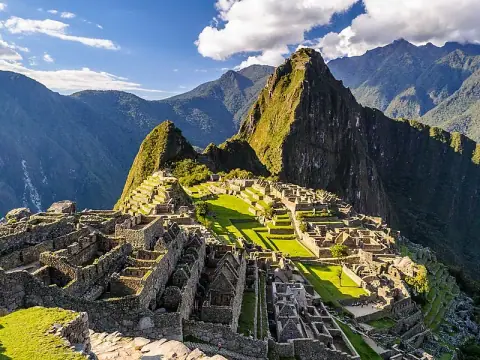
Machu Picchu, Peru
Perched between the Andean Mountain peaks, Machu Picchu remains one of the most mysterious ruins on Earth. Its ancient walls and terraces blend seamlessly into the rugged landscape, leaving many in awe of the Incan ingenuity.
- Hidden 600 meters above the Urubamba River
- Constructed in the 15th century and abandoned just over 100 years later
- Intihuatana, a ritual stone, aligns with the sun during the winter solstice
- Known as the "Lost City of the Incas"
Aside from looking otherworldy, some argue Machu Picchu is the result of just that. The impressive architectural feats and advanced astronomical knowledge evident at Machu Picchu leaves one to wonder if it had an alien influence, or the influence of a high, lost civilisation. Precision of the stonework, the alignment of the structures with astronomical events, and the overall complexity of the site are said are to be beyond the capabilities of the people of the time.
Stonehenge, England
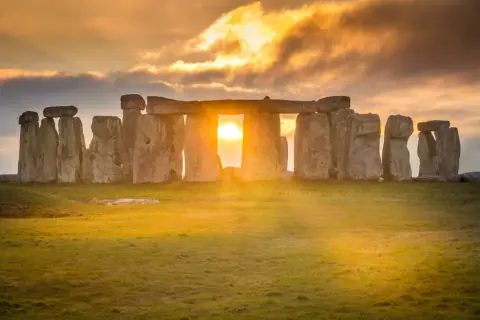
Stonehenge's colossal standing stones cast eerie shadows on Salisbury Plain, enveloping the area with a sense of ancient ceremony. It's a stark reminder of the prehistoric era's enigmatic cultures.
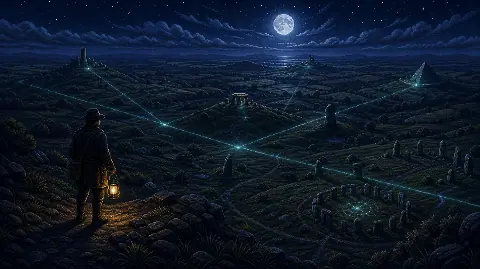
Similarly to Machu Picchu, the precise arrangement of the stones, the sheer weight of these stones, and the fact they are so precisely aligned with solstices and astronomical phenomena, indicates knowledge and capabilities potentially beyond those of the people of the time. However fanciful this may seem, and not to detract from the knowledge of our ancestors, but what was built, and what the supposed builders had at their disposal don't quite seem to match.
- An archaeological marvel from 3000 to 2000 BC
- Circle of towering trilithons dominates the landscape
- Aligns with the sunrise of the summer solstice
- A UNESCO World Heritage site with a spiritual presence that's palpable
Teotihuacan, Mexico
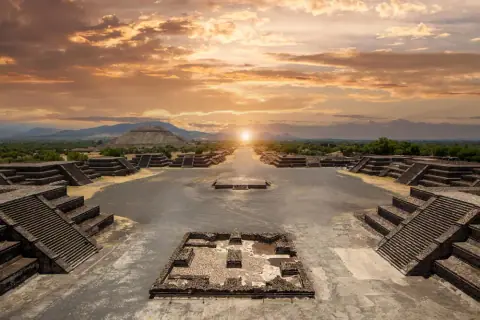
The monumental city of Teotihuacan, with its Pyramid of the Sun and the Moon, showcases the grandeur of Mesoamerican civilizations before the Spanish conquest.
Is the city's advanced urban planning, architectural sophistication, and astronomical alignments evidence of alien influence?
- Houses the third-largest pyramid in the world
- Established around 100 BC, reaching its zenith by 450 AD
- Avenue of the Dead is a road connecting various pyramids and temples
- Known to the Aztecs as the place where "gods were created"
Petra, Jordan
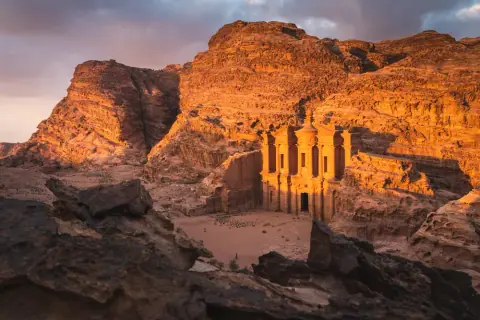
Carved directly into rose-red cliffs, Petra tells tales of a thriving society that once ruled the trade routes of ancient Arabia. Walking through the Siq to behold the Treasury is like stepping through a portal in time.
The ruins remind me of a scene out of Star Wars, or a grand entrance to some dwarven kingdom. Petra is much larger than people may first assume. The stone is very hard, requiring hardened, sophisticated tools to carve. Plus, there are advanced water systems. These facts lead many to believe that the Nabateans found the sites at Petra abandoned.
- Capital of the Nabatean kingdom around the 1st century AD
- Al Khazneh, or the Treasury, is an astounding 45 meters high
- Complex water management system that supported a large community
Enchanted Landscapes
Fairy Pools, Isle of Skye, Scotland
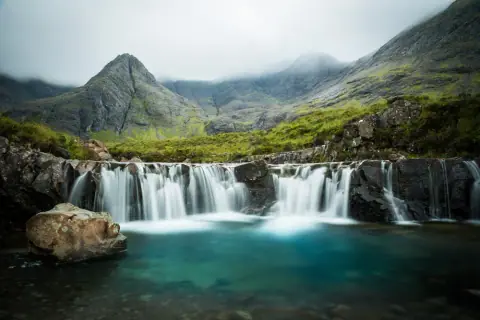
The Fairy Pools on the Isle of Skye are like entering a Celtic legend. Nestled amongst Scotland's rugged terrain, these crystal-clear blue pools are linked by waterfalls, each more mesmerizing than the last. Here's what makes this site a truly enchanting.
- Water Clarity: The water's so clear, it's like peering into a different realm.
- Natural Architecture: Cascading waterfalls carve through rock, creating natural infinity pools.
- Atmosphere: On a sunny day, the reflections and plays of light add to the fairy-tale ambiance.
Wulingyuan Scenic Area, China
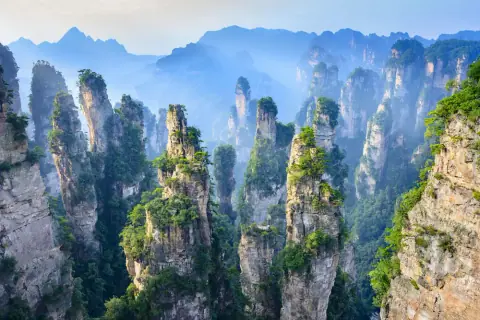
Wulingyuan Scenic Area in China will take your breath away. It's like walking into an ancient Chinese painting, where nature's brushstrokes crafted over 3,000 quartzite sandstone pillars, some towering over 660 feet. Add to this the misty ravines, natural bridges, and pristine waters, and you've got the following highlights.
- Avatar's Inspiration: It's said to have inspired the floating mountains in the movie Avatar.
- Diversity of Flora: The region is a haven for wildlife and lush vegetation.
- Peak Seasons: Mist envelops the landscape in spring and autumn, enhancing its mystical feel.
Pamukkale, Turkey
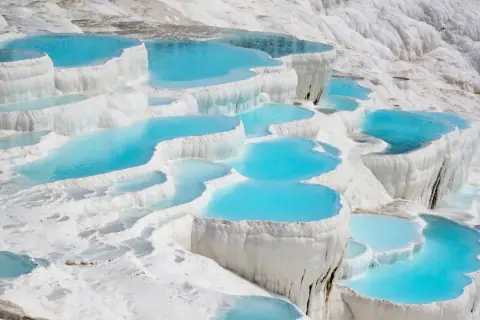
Visiting Pamukkale in Turkey offers an experience akin to wandering around a snowscape, except it's not snow but terraces of mineral-rich thermal waters. This place is renowned for its otherworldly appearance, though this is not connected to any theories of extraterrestrial influence.
This natural phenomenon creates cascading, snow-white terraces and pools, often described as a "cotton castle," which is what "Pamukkale" translates to in Turkish.
In addition to its natural beauty, Pamukkale is also home to the ancient Greco-Roman and Byzantine city of Hierapolis, which was built on top of the travertine.
- Thermal Pools: The travertine terraces are fed by warm, mineral-rich springs.
- Historical Depth: Ancient ruins of Hierapolis provide a backdrop, merging nature with history.
- Health Benefits: The waters are believed to have therapeutic properties, a secret to beauty since Roman times.
Each of these destinations provides a sensory journey through landscapes that appear crafted by magic rather than the forces of nature. Whether it's the ethereal blue of the Fairy Pools, the towering pillars of Wulingyuan, or the dazzling terraces of Pamukkale, the enchantment these sites evoke is undeniable.
Magical Natural Wonders
Earth has plenty of natural phenomenon that defy ordinary description. I'm swept away by the mystique of these locations, where the feeling of something otherworldy is undeniable..
Salar De Uyuni, Bolivia
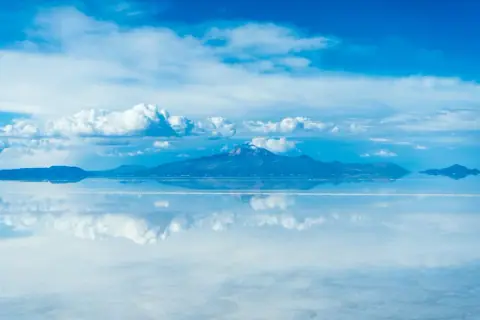
Stretching over an expansive 4,086 square miles, Salar de Uyuni is the world's largest salt flat. One can't help but marvel at the mirror-like effect after a rain, reflecting the sky so perfectly that it becomes near impossible to tell where the land ends and the heavens begin.
This unique feature of Salar de Uyuni, where the sky and ground seemingly merge into one, has made it a popular destination for travelers seeking extraordinary natural landscapes. It's often described as feeling like walking on the clouds or standing at the edge of the earth.
- Leftover from prehistoric lakes
- Thickness can vary from a few inches to a few feet
- Home to the world's first salt hotel
Northern Lights, Arctic Circle
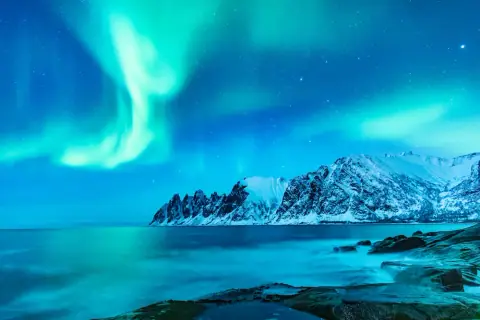
Nature's most spectacular light show, the Northern Lights or Aurora Borealis, are a symphony of color and movement. They paint the Arctic sky with curtains of green, purple, and pink, a breathtaking many long to witness. A true connection to the sky and stars.
These lights occur when charged particles from the sun collide with atoms in Earth's atmosphere near the magnetic poles, causing these atoms to light up. This results in spectacular displays of undulating lights
While the phenomenon is well-understood scientifically, the stunning beauty and ethereal quality of the Northern Lights continue to captivate observers, often leaving them with a feeling of witnessing something otherworldly.
- Peak visibility from September to March
- A result of charged particles from the sun colliding with the atmosphere
- Best seen in countries like Norway, Iceland, and Canada
Waitomo Glowworm Caves, New Zealand
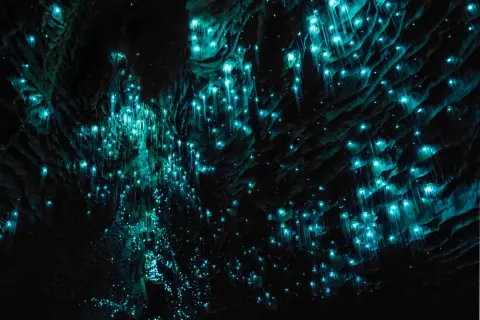
The Waitomo Glowworm Caves in New Zealand are a hidden subterranean universe, offering an otherworldly experience, not due to extraterrestrial influence, but because of their unique natural inhabitants. Here, Glowworms (Arachnocampa luminosa) illuminate the caverns with their ethereal turquoise glow, guiding people through a mystical underground river.
These tiny creatures emit a bioluminescent light, creating a star-like effect on the ceilings of the dark cave passages. This natural light display is a form of chemiluminescence that occurs through a chemical reaction in the body of the glowworms. The purpose of the light is to attract prey into their sticky, thread-like webs.
The effect is a magical, starry environment within the caves, often described as ethereal or dreamlike. Visitors to the caves can experience this unique spectacle on guided boat tours, which glide through the grottoes and waterways, under the luminous glow of thousands of these tiny lights in this fantasy-like world.
- Glowworms are unique to New Zealand
- The caves were formed over 30 million years ago
- Visitors can experience the caves via boat tour or black water rafting
Antelope Canyon, USA
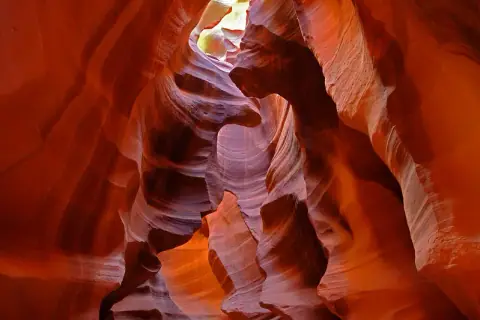
Carved from the earth by water and wind over countless millennia, Antelope Canyon in Arizona presents a surreal landscape of smooth, flowing rock. The interplay of light and shadow through the narrow sandstone walls creates a dynamic display of color and form with each visit.
The canyon's formation is due to the erosion of Navajo Sandstone, primarily due to flash flooding and other sub-aerial processes. Over time, the passageways have become smooth and flowing in appearance, resembling waves carved into stone.
Photographers and tourists are drawn to Antelope Canyon for its extraordinary landscapes, which often appear otherworldly. The beams of light that penetrate certain parts of the canyon at specific times of the day create a magical atmosphere.
- Known for its wave-like structure
- Consists of two separate sections – the Upper and Lower Canyons
Mystical Forests
Black Forest, Germany
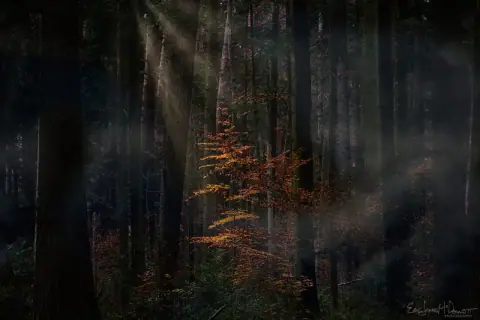
The Black Forest in Germany, known as Schwarzwald in German, has long been associated with a sense of otherworldliness, not due to any extraterrestrial origins, but because of its dense, dark woodlands and rich folklore. The forest covers a large area in southwestern Germany and is famous for its picturesque and dense evergreen forests and charming villages.
The name "Black Forest" comes from the thick canopy of evergreens that blocks most of the light inside the forest, giving it a dark, mysterious appearance. This setting has been the backdrop for numerous folktales and legends, including some of the Grimm Brothers' fairy tales, contributing to its mystical and enchanting reputation.
The area is steeped in history and tradition, offering visitors a chance to immerse themselves in a rich, natural setting that feels like stepping into a storybook.
- The trees stand dense and dark, giving the forest its namesake
- A hub for hiking trails leading to stunning views and serene lakes
- You might stumble upon hamlets with half-timbered houses that look like they've been plucked out of a storybook
Mossy Forest, Malaysia
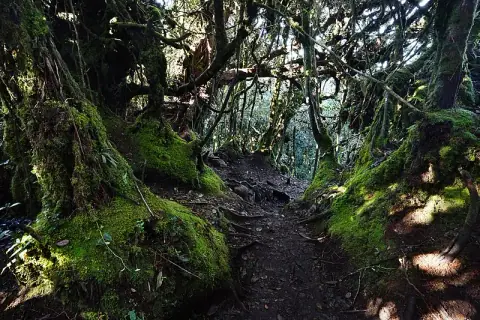
Higher elevations bring you to the Mossy Forest nestled in the Cameron Highlands of Malaysia. - The cloud-forest is shrouded in ethereal fog most of the time.
The forest gets its distinct appearance from the high humidity and low-level clouds that are common in these high altitudes. This environment creates a constantly damp condition, ideal for the growth of mosses, ferns, lichens, and orchids. The dense moss that blankets the trees and the ground gives the forest a mystical, almost magical look.
The cool climate and the misty conditions contribute to the surreal, dream-like quality of the Mossy Forest, making it a popular destination for nature lovers and photographers.
- Boardwalks wind through moss-covered trees and exotic plants
- A biodiversity hotspot with a variety of endemic species
- Photo-worthy vistas can be found at every turn, complete with lush greenery and rare orchids
Aokigahara Forest, Japan
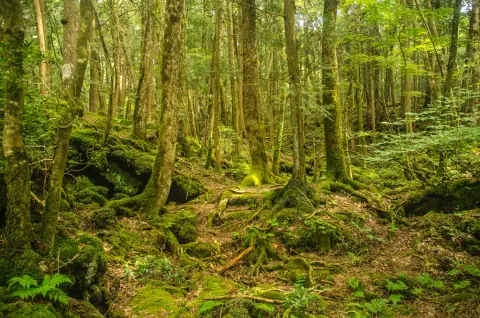
Aokigahara Forest, located at the northwest base of Mount Fuji in Japan, is often perceived as an otherworldly place, largely due to its dense trees, quiet atmosphere, and distinctive history. This forest is also known as the Sea of Trees (‘Jukai' in Japanese) and is notorious for its association with Japanese mythology and folklore, as well as more modern associations with the supernatural.
Aokigahara has a historical reputation as a site associated with yūrei, or Japanese ghosts, and has been the subject of various literary and cinematic works that contribute to its mysterious and sometimes unsettling reputation. However, it's also a place of natural beauty, with caves, moss-covered trees, and scenic views of Mount Fuji.
- Also known as the Sea of Trees
- The forest floor is juxtaposed with volcanic rock from historic eruptions
- Rumored to be haunted, it's surrounded by mystique and folklore
- Even though its eerie reputation, the forest has a tranquil beauty, graced by ice caves and quiet clearings
Crooked Forest, Poland
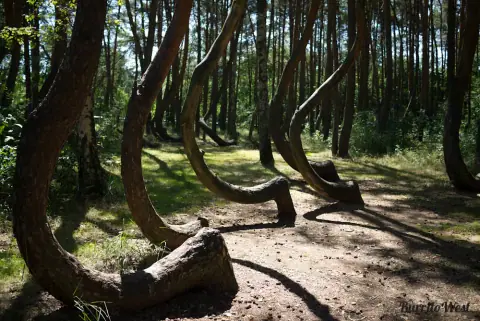
Near the town of Gryfino, Poland lies a forest as bizarre as it is beautiful. Approximately 400 pine trees with a peculiar 90-degree bend at their base.
The Crooked Forest in Poland is a unique and intriguing natural phenomenon that captures a sense of the otherworldly, not due to any extraterrestrial influence but because of its unusual and mysterious tree formations.
Despite the numerous hypotheses, no definitive explanation has been universally accepted, which adds to the forest's mystical appeal.
- Planted around 1930, the cause of their shape remains a mystery
- Theories range from snow damage to orchestrated timber manipulation
Surreal Volcanic Landscapes
Mount Kilimanjaro, Tanzania
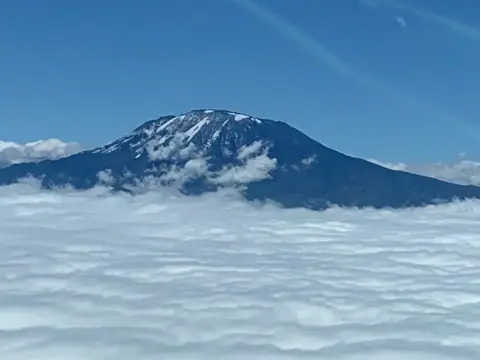
Standing as a sentinel above the African plains, Mount Kilimanjaro is one of the most iconic natural wonders. It's the highest peak in Africa, and climbing it presents an otherworldly journey through five distinct climate zones.
The diverse ecosystems found on Kilimanjaro add to its mystical aura. As one ascends, the landscape changes dramatically, from lush rainforests at the base, to alpine meadows, and finally to a barren lunar-like landscape at the higher elevations.
- Rainforest, brimming with lush foliage and diverse wildlife
- Heath, populated by heather and alpine flora
- Moorland, known for its alienesque giant lobelias and groundsel plants
- Alpine Desert, where the air thins and vistas expand - Arctic Summit, where glaciers and snow provide stark contrast to the equatorial region below
The sheer variety within one single mountain makes Kilimanjaro a world of its own.
Yellowstone National Park, USA
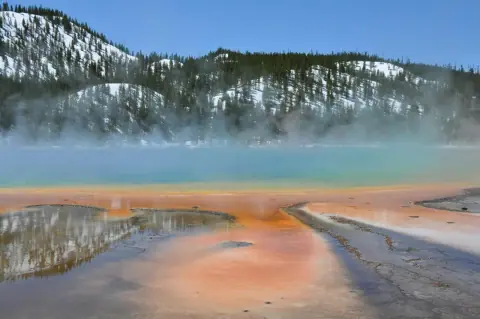
As the first national park in the world, established in 1872, Yellowstone spans across Wyoming, Montana, and Idaho. Yellowstone's geothermal wonders make it a surreal spot on Earth where fiery powers shape the surface.
The combination of geological wonders, rich biodiversity, and striking landscapes gives Yellowstone a surreal beauty that seems almost otherworldly. Visitors to the park can experience a sense of awe and wonder at the natural forces at work, offering a glimpse into both the volcanic activity of the Earth’s past and the evolving ecological processes of the present.
- The Grand Prismatic Spring, with vibrant colors lining its edges
- Scores of geysers, including the reliable Old Faithful
- Bubbling mud pots, painting a picture of primeval landscapes
- Fumaroles, hissing out steam and gases, hinting at the untamed force below
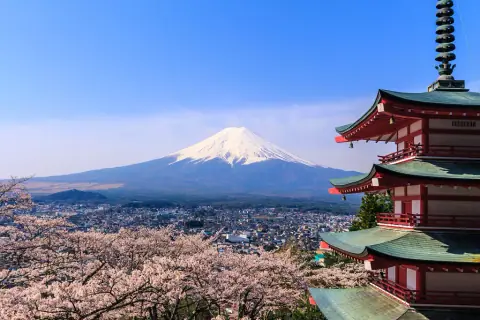
Mount Fuji, Japan
Japan's Mount Fuji is a symphony of tranquility and power. The stratovolcano, which last erupted in the early 18th century, holds sacred significance.
This iconic and revered natural landmark often associated with a sense of the otherworldly due to its majestic beauty and cultural significance. Mount Fuji's striking appearance has made it a subject of admiration and inspiration in Japanese art, literature, and religion for centuries. It is considered a sacred mountain in Shintoism and has been a pilgrimage site for hundreds of years.
The blend of natural beauty, cultural importance, and spiritual symbolism contributes to its reputation as a transcendent and almost surreal landmark
- Perfect, snow-capped symmetry viewed from miles around
- A pilgrimage route for those seeking spiritual solitude
- A challenge for climbers aiming to catch the sunrise from the summit
- A backdrop for cherry blossoms, making it a photographer's paradise
Mount Fuji isn't just a mountain; it's a cultural icon.
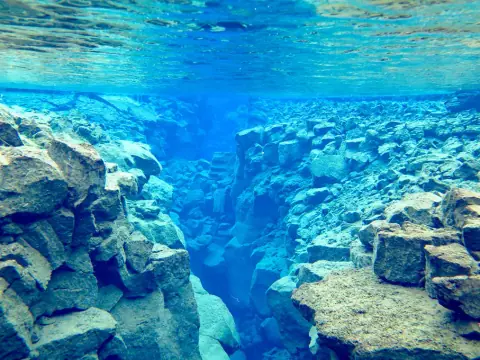
The Silfra Fissure, Iceland
The Silfra Fissure in Iceland is a remarkable natural site known for its otherworldly underwater landscapes, a characteristic derived from its unique geological and environmental features. Located in the Þingvellir National Park, Silfra is a rift formed in the divergent tectonic boundary between the North American and Eurasian plates.
What makes Silfra particularly extraordinary is the clarity of its water and the surreal experience it offers for divers and snorkelers. The water in Silfra is some of the clearest in the world, with visibility often extending over 100 meters!
- Incredibly clear waters for visibility exceeding 100 meters
- The experience of swimming between two continents
- Underwater landscapes that echo the drama of Iceland's volcanic legacy
- A geological marvel for both divers and scientists alike
Bathed in the ethereal blues and clarity of glacial meltwater, the Silfra Fissure captivates not just with its beauty, but with its profound geological significance. All of this contributes to its reputation as an otherworldly and surreal natural wonder.
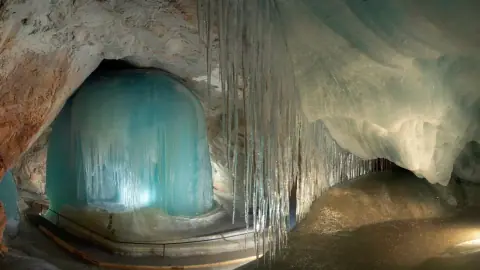
Caves of Wonder
I'm captivated by caves not just for their geological formations but also for the sense of stepping into an entirely different world, as caves can truly provide an otherworldly experience.
Eisriesenwelt Ice Cave, Austria
Eisriesenwelt, known as the world's largest ice cave and for its otherworldly and breathtaking interiors, stemming from its natural ice formations, extends over 42 kilometers and offers an ice palace that seems carved from an artist's imagination.
Eisriesenwelt Ice Cave offers a unique glimpse into a frozen, subterranean world, its natural ice artistry providing a sense of wonder where shimmering ice walls and the play of light turns the ice into various shades of blue and white.
- The natural ice sculptures that change shape every year
- The dynamic interplay of light and ice providing breathtaking visuals
- The cave's complex system of passages that remains largely unexplored
Upon entering Eisriesenwelt, the atmospheric shift is palpable; the crisp air and the echo of distant dripping water serve as a constant reminder of the cave's living nature.
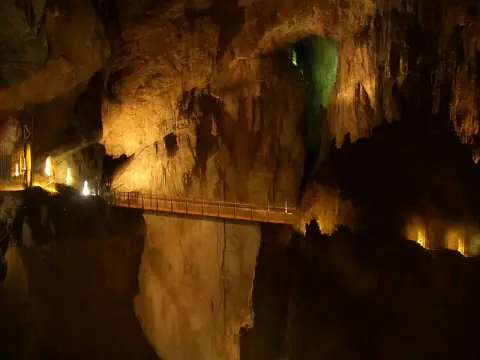
Skocjan Caves, Slovenia
The Škocjan Caves in Slovenia are a remarkable natural wonder, known for their immense size and unique geological formations, creating an otherworldly atmosphere. These caves are part of the UNESCO World Heritage due to their extraordinary underground canyon and the diverse array of stalactite and stalagmite formations.
One of the most striking features of the Škocjan Caves is the immense size of some of its underground spaces. The Martel Chamber, for instance, is one of the largest known underground chambers in the world.
The experience of walking through these caves is likened to stepping into a mythical or fantasy world, with the natural architecture creating a sense of awe and wonder reminiscent of a Dwarven Kingdom straight out if LOTR.
- A network of limestone caves carved by the Reka River
- One of the largest known underground canyons in the world
- Unique ecosystems with diverse, specially-adapted fauna
The raw power of water shaping the earth over millions of years is nowhere more apparent than within the depths of Skocjan. The enormity of its chambers is humbling, offering a stark perspective on human's place within nature's grand scheme.
Cenotes of Yucatán Peninsula, Mexico
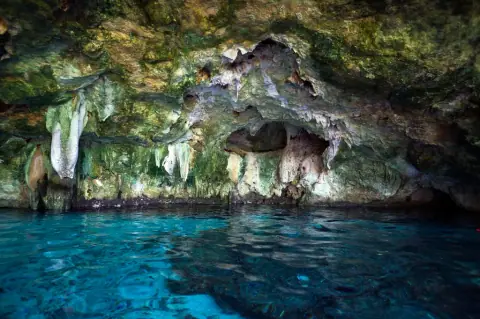
Cenotes, these natural limestone sinkholes are scattered across the Yucatán Peninsula, and they carry with them the mystique of ancient Mayan civilization.
These are natural sinkholes or pits, resulting from the collapse of limestone bedrock that exposes the groundwater beneath. They are renowned for their stunning beauty and crystal-clear waters, creating an ethereal and otherworldly environment.
Beyond their natural beauty, cenotes hold significant historical and cultural importance in Mayan civilization. They were considered sacred and were often used for ritualistic purposes, including offerings to the gods and sometimes as sites for human sacrifice.
- Crystal-clear waters that are perfect for snorkeling and diving
- A variety of cenotes ranging from open-air pools to complex underground cave systems
- Incredible rock formations and hanging roots that create an ethereal atmosphere
The water in these cenotes is often so transparent that it feels like floating in air, offering a unique lens into the subterranean biodiversity of the region. The experience of swimming in a cenote is nothing short of magical, with light filtering through the water to reveal a hidden world below.
Watery Worlds
From calm mirrored surfaces to fiery watery pits, Earth's watery worlds provide some of the most breathtaking and surreal experiences. Here are a few mesmerizing destinations where water either reflects the beauty of the world around it or defies expectation with its unique characteristics.
Mirror Beach, Japan
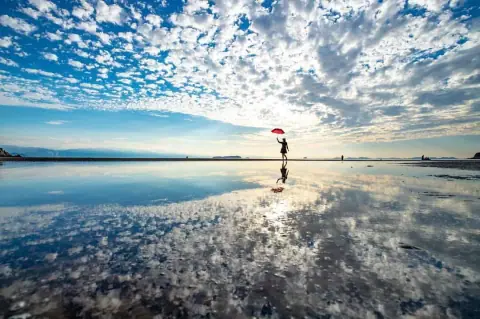
Mirror Beach in Japan, known for its reflective qualities that create a surreal and otherworldly visual experience.
This beach, particularly famous during specific times of the year and under certain weather conditions, exhibits a phenomenon where the sand becomes extremely flat and smooth, creating a mirror-like effect. When a thin layer of water covers this smooth sand, it reflects the sky, clouds, and surrounding landscape, creating a mesmerizing and picturesque scene.
Visitors to Mirror Beach are often captivated by the illusion of walking on water or in the sky, as the reflections create a seamless blend between the sky and the ground.
- During the rainy season, the thin layer of water covering the sand transforms the beach into a vast, reflective mirror, creating an illusion of walking on water.
- In contrast to the wet season, the dry period reveals a cracked white landscape, so lunar in appearance that it seems almost like I've stepped onto the moon itself.
Lake Hillier, Australia
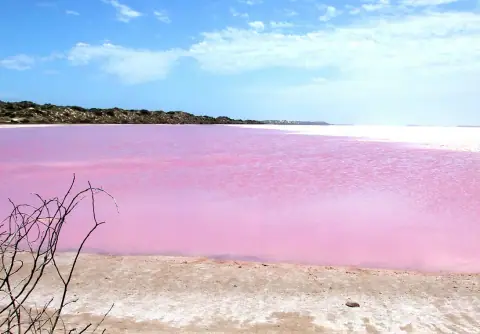
Lake Hillier is like looking at a slice of another world. Imagine a planet where all seems similar to Earth, yet the oceans and lakes are pink. That's the vibe Lake Hillier gives off with it's strikingly vivid pink color, creating an otherworldly and surreal appearance.
The lake's distinctive color is due to the presence of certain types of algae and bacteria. These microorganisms produce carotenoids, which are organic pigments that contribute to the pink coloration. Specifically, the algae Dunaliella salina and the bacteria Halobacteria are known to play roles in the lake's unique color.
- The lake's vibrant and enduring pink hue is an extraordinary sight against the dark blue backdrop of the Indian Ocean.
- Surrounded by lush eucalyptus trees, the contrast of colors around Lake Hillier only heightens its otherworldly vibe.
- The pink color is believed to be from microorganisms or bacteria interacting with the salt in the lake's water.
The pink takes some time to get used to. But stare long enough and you can just picture how it might work on an alien world.
The Door to Hell, Turkmenistan
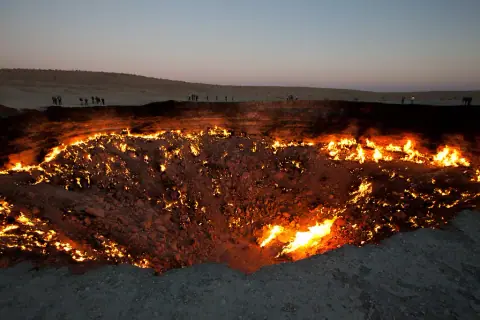
The Door to Hell in Turkmenistan provides an almost apocalyptic vision. Officially known as the Darvaza gas crater, it is a surreal and visually striking phenomenon that has captivated the imagination of many. It is actually not a natural phenomenon but rather the result of a man-made event.
In 1971, Soviet geologists drilling at the site accidentally caused the ground to collapse, creating a large crater. To prevent the escape of poisonous gas into the atmosphere, the decision was made to burn off the gas. The geologists expected the fire to use all the fuel within a few days, but the gas continued to burn, and it has been alight ever since.
The crater is approximately 70 meters in diameter and about 30 meters deep. The fire burning within gives it an eerie glow, especially at night, which has led to its nickname "The Door to Hell."
- This fiery chasm, with a constantly burning inferno, is the result of a collapsed natural gas field lit to prevent gas dispersal.
- Gazing into the flames of this human-made marvel, there's a mix of awe and a sobering reminder of nature's volatile power under our feet.
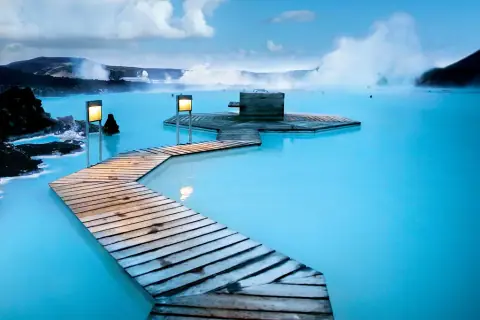
The Blue Lagoon, Iceland
The Blue Lagoon in Iceland is a geothermal spa known for its striking milky blue waters, creating a serene and otherworldly ambiance. Located in a lava field near Grindavík on the Reykjanes Peninsula, southwestern Iceland, it is not a natural phenomenon but a man-made lagoon, fed by water from the nearby Svartsengi geothermal power station.
The lagoon's signature blue color comes from the silica, which reflects sunlight and gives the water its milky blue appearance. The temperature in the bathing and swimming area of the lagoon averages 37-39°C (99-102°F), making it an inviting destination year-round.
- Nestled in a lava field, the geothermal spa with its milky-blue water provides a stark contrast to the rugged landscape.
- The warm waters are rich in minerals like silica and sulfur, believed to have skin-healing properties.
- The lagoon's inviting warmth amidst the chilly air feels like sinking into a natural, otherworldly hot tub.
Extraordinary Geological Formations
Immersing myself in the wonders of nature often leads me to the most surreal landscapes on Earth. It's in these places I find the most extraordinary geological formations that seem to defy the ordinary laws of nature. This section of the article invites you to explore some of the most spectacular examples.
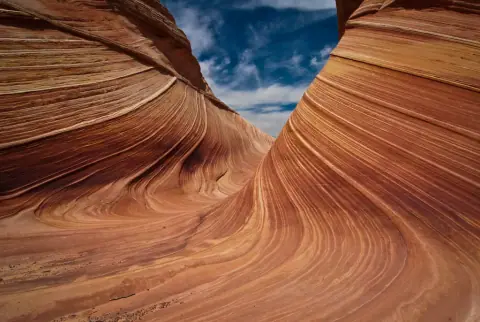
The Wave, Arizona, USA
The Wave in Arizona, USA, is a mesmerizing natural rock formation known for its undulating, wave-like structure and striking, striated patterns.
This geological wonder is made of Jurassic-age Navajo Sandstone, which has been slowly eroded by wind and rain over millions of years, forming a series of troughs and crests. The Wave's unique appearance is characterized by its smooth, flowing lines and vibrant color bands that range from reds to yellows, creating a surreal and otherworldly landscape.
- Location: On the slopes of Coyote Buttes, Arizona-Near Utah Border
- Age: Approximately 190 million years
- Material: Navajo sandstone
- Colors: A spectrum of red, pink, white, and yellow
- Access: Requires a permit with only 20 available per day
- Significance: The sweeping waves of rock formed by the relentless forces of wind and rainwater
The Giant's Causeway, Northern Ireland
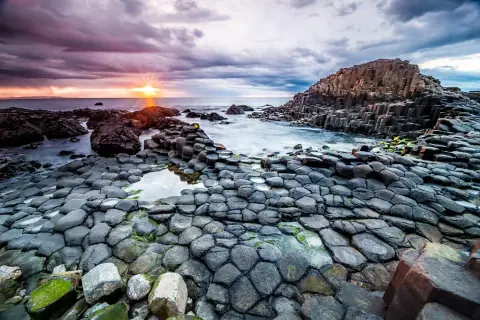
Stepping onto the Giant's Causeway feels like walking on a pathway designed for mythic beings. These impressive basalt columns emerged from volcanic eruptions and carry the weight of legends.
The Giant's Causeway in Northern Ireland is a natural wonder known for its peculiar and otherworldly geological formation. Located on the northeast coast of Northern Ireland, this UNESCO World Heritage Site features about 40,000 interlocking basalt columns, the result of an ancient volcanic eruption.
The Giant's Causeway's unique appearance has inspired numerous legends, the most famous being that it was built by the Irish giant Fionn mac Cumhaill (Finn McCool) as stepping stones to Scotland to face his Scottish rival. This myth adds to the mystical aura of the site.
- Column Count: Over 40,000 interlocking basalt columns
- Majestic Height: Columns reaching up to 36 feet (approx. 11m)
- Origin Story: A walkway constructed by feuding giants according to legend
- Recognition: Listed as a popular tourist destination in Northern Ireland
Surreal Deserts
White Desert, Egypt
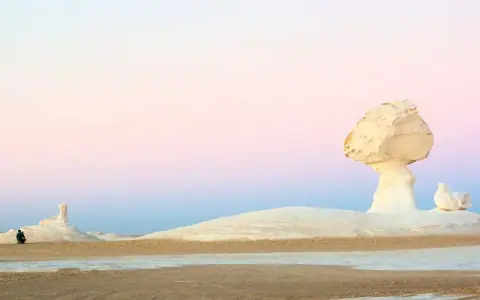
When I think of the desert, my mind usually pictures a vast expanse of golden sand. But, Egypt's White Desert challenges those expectations.
What makes the White Desert particularly striking is its bizarre and ghostly rock formations, created by centuries of erosion. These formations take on whimsical shapes, resembling animals, mushrooms, and even human faces, set against the powdery white sand. The contrast of these white formations against the backdrop of the clear blue sky creates a dreamlike scenery that feels almost alien.
- Chalk formations, sculpted naturally by sandstorms, create an alien landscape.
- By night, the desert floor glows, reflecting the moonlight with an otherworldly luminescence.
- The desert spans an area of about 300 square kilometers, offering an extensive terrain to explore.
Namib Desert, Namibia
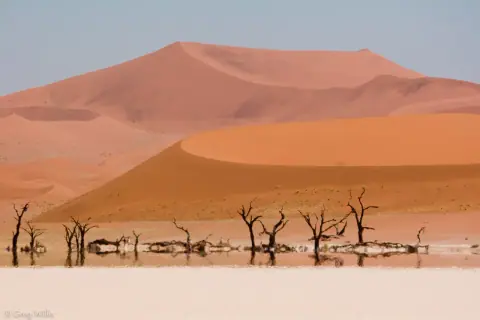
The Namib Desert in Namibia is one of the oldest and most surreal deserts in the world, known for its vast dune landscapes that create a sense of the otherworldly. Spanning along the Atlantic coast of Southern Africa, the Namib Desert is characterized by its high sand dunes, which are among the tallest in the world, and its unique ecosystem adapted to the arid conditions.
An iconic part of the Namib Desert is the Sossusvlei area, known for its large, red dunes surrounding a salt and clay pan. Nearby is Deadvlei, famous for its ancient, dead camel thorn trees set against the white clay pan floor and red dunes, creating a haunting and alien-like scenery.
- Some of the tallest dunes on Earth, with some reaching a staggering 380 meters.
- A unique ecosystem, including endemic species like the Namib Desert Beetle.
- Color contrasts that come alive especially during sunrise and sunset when the play of light and shadow is truly mesmerizing.
Valle de la Luna, Chile
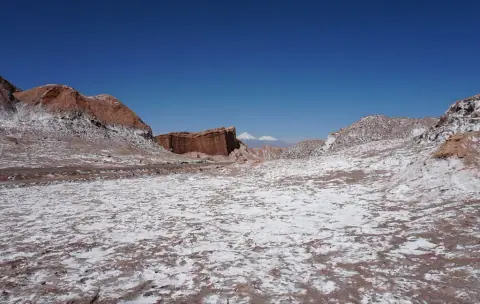
Valle de la Luna, or Valley of the Moon, located in the Atacama Desert in Chile, is renowned for its lunar-like landscapes, giving it an otherworldly appearance. This name is derived from the valley's unique geological formations and its stark, moon-like terrain.
One of the most striking features of Valle de la Luna is the way the landscape changes colors during sunset. The setting sun casts shadows and brings out the rich colors of the soil and rock formations, creating a breathtaking spectacle.
This extraordinary valley offers a glimpse into a world that seems beyond Earth, showcasing the diverse and dramatic beauty of our planet's landscapes.
- Lunar-like craters and spires, making it a popular site for those captivated by the celestial.
- Dry salt lakes whose crusts create patterns that resemble the surface of the moon.
- Remarkable variations in color and texture, ranging from rugged stone and sand formations to salt deposits.
Each of these deserts captures the essence of a landscape that is both desolate and teeming with a unique kind of vitality that's found nowhere else on Earth.
Unique Water Bodies
The quest for destinations that transcend the traditional beach or lake experience often leads me to the most unconventional and mesmerizing water bodies on Earth. From lakes with striking colors to beaches without a grain of sand, our planet offers water forms that defy conventional beauty and composition.
Spotted Lake, Canada
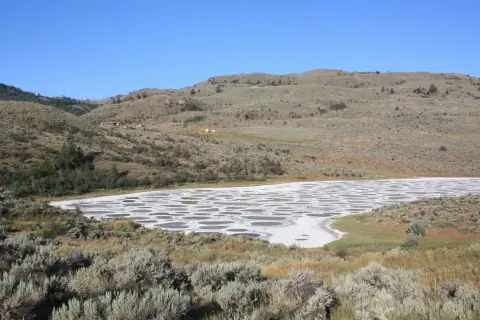
Spotted Lake, or Kliluk, sits in British Columbia's desert and shines as one of the most peculiar natural wonders.. The lake isn't just known for its water; it's the dramatic transformation it undergoes that catches every eye.
The lake has long been revered by the local Syilx (Okanagan) First Nations people, who view it as a sacred site. The minerals in the lake were traditionally used for their therapeutic properties, and the lake itself was considered a spiritual place.
- During summer, water evaporation reveals over 300 mineral pools.
- The pools emanate an array of colors due to concentrations of calcium, sodium sulfates, and other minerals.
- The unique distribution of minerals creates an almost otherworldly pattern, often referred to as ‘spots'.
Red Beach, Panjin, China
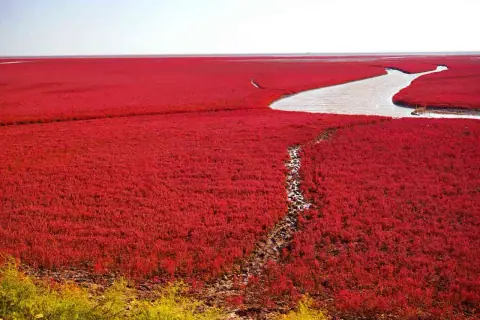
Red Beach in Panjin, China, is a unique natural phenomenon known for its strikingly red appearance, creating an otherworldly and surreal landscape. This unusual coloration is not due to the sand but results from a type of seaweed called Suaeda salsa, which turns bright red in autumn.
This beach has to be one of the most alien-like landscapes Earth has to offer.
- Red Sueda, a type of seaweed, blankets the wetlands.
- In autumn, the Sueda turns a spectacular shade of crimson, transforming the landscape into a vibrant red expanse.
- The area is a haven for wildlife, including the rare and appropriately named red-crowned crane.
Plitvice Lakes National Park, Croatia
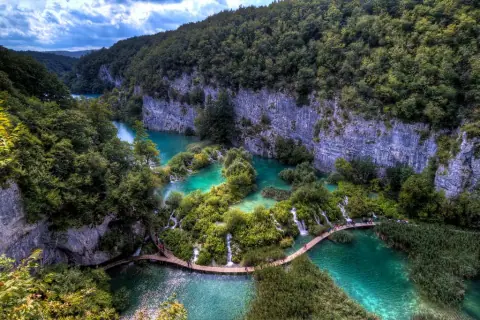
Plitvice Lakes National Park in Croatia is renowned for its otherworldly beauty, marked by a series of stunning turquoise lakes, cascading waterfalls, and lush forested surroundings. This UNESCO World Heritage site, located in central Croatia, is one of the country's most famous natural attractions.
What makes Plitvice Lakes particularly unique is the formation of travertine barriers, which are created by the deposition of calcium carbonate from the water as it flows over plants and rocks. This ongoing process continually shapes and reshapes the landscape.
I find this landscape to be graceful, almost like where you'd find an Elvish village.
- The park features 16 terraced lakes connected by waterfalls.
- Natural travertine barriers form over time, creating unique barriers between water bodies.
- The vibrant colors of the lakes, ranging from azure to green, grey, and blue, are a result of minerals and organisms in the water.
Exploring these water bodies offers a glimpse into the dynamic artistic nature of our planet, where every destination holds a secret waiting to be unraveled by the curious and adventurous.
Extraordinary Mountain Landscapes
Mount Roraima, Venezuela/Brazil/Guyana
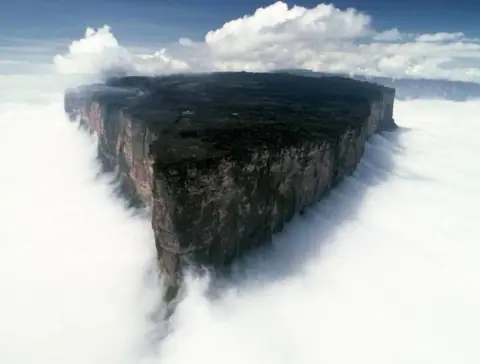
Mount Roraima, located at the triple border point of Venezuela, Brazil, and Guyana, is a stunning natural wonder known for its sheer cliff walls and a flat tabletop summit that creates a surreal and otherworldly landscape. This tepui (table-top mountain) is one of the oldest geological formations on Earth, dating back to approximately two billion years.
Mount Roraima's sheer cliff faces and summit that stretches across three countries isn't just a sight for sore eyes, it's a geologist's dream and a nature enthusiast's paradise.
The plateau of Mount Roraima is often shrouded in clouds, and its top is isolated from the ground, creating a unique ecosystem with many endemic species of flora and fauna. The mountain's summit, which is around 2,800 meters (9,186 feet) above sea level, is famed for its unusual rock formations, waterfalls, and "islands in the sky" landscape.
One of the most striking features of Mount Roraima is its near-vertical 400-meter (1,300 feet) high cliffs. The tabletop is often surrounded by low-lying clouds, giving it a mystical appearance, as if floating above the surrounding landscape. This has inspired various myths and legends among the indigenous peoples, and it famously influenced Sir Arthur Conan Doyle's novel "The Lost World," where dinosaurs and other prehistoric creatures were depicted as surviving on a similar plateau.
- Shared Peak: The tabletop mountain's peak is an intersection of Venezuela, Brazil, and Guyana, though Venezuela offers the most accessible route.
- Prolific History: Mount Roraima has long been shrouded in legend. Locals once believed it was populated by mystical creatures.
- Unique Biodiversity: Its isolated plateau hosts a range of unique flora and fauna, some found nowhere else on Earth.
- Stunning Vistas: For those willing to make the trek, the views from the top are nothing short of otherworldly, providing a panoramic spectacle that's often cloaked in swirling mists.
Vinicunca, Peru
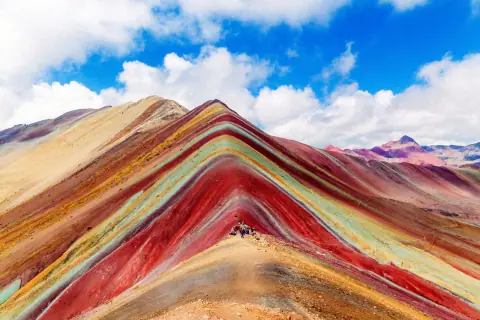
Vinicunca, also known as the Rainbow Mountain or Montaña de Siete Colores (Mountain of Seven Colors), in Peru, presents a surreal and visually striking landscape. Located in the Andes Mountains of Peru, it has gained international fame for its unique panoramic views and the distinctive, vibrant colors of its hills.
The mountain's colors are the result of a combination of various mineral deposits. Layers of iron, copper, and other minerals have been exposed by erosion and weathering, creating stripes of vivid colors including red, purple, green, and yellow across its slopes. This geological phenomenon creates a breathtaking and almost otherworldly appearance, often compared to a painting.
- Colorful Ridges: The mountain sports stripes of turquoise, lavender, gold, and other hues, attributed to mineralogical variations.
- Cultural Significance: Known locally as Vinicunca, the name means ‘colored mountain' in Quechua, reflecting the indigenous heritage.
- Revealed by Climate Change: Once cloaked under snow, the mountain's colors were only recently revealed as the snow began to recede.
- Rising Popularity: Vinicunca attracts hundreds daily, becoming a bucket-list destination for adventurous travelers.
Danakil Depression, Ethiopia
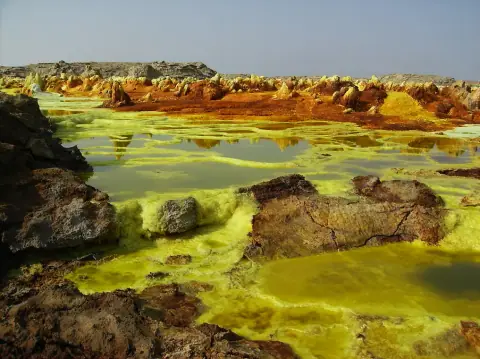
The Danakil Depression in Ethiopia is one of the most extreme and otherworldly landscapes on Earth. Located in the Afar Region, it is a geological depression that has resulted from the divergence of three tectonic plates in the Horn of Africa. With one of the lowest points on the planet not covered by water, reaching about 125 meters (410 feet) below sea level, and temperatures that often soar above 45 degrees Celsius (113 degrees Fahrenheit), the Danakil Depression is known for its harsh and inhospitable environment.
One of the most striking features of the Danakil Depression is its vibrant and varied colors, particularly in the hydrothermal fields. The area is dotted with hot springs, geysers, and acidic pools, colored in bright yellows, greens, and oranges due to the presence of sulfur and other minerals. The landscape is also characterized by vast salt flats, rugged lava fields, and volcanic formations, including the continuously active Erta Ale volcano, one of the few in the world with an almost persistent lava lake.
The harsh conditions of the Danakil Depression, including extreme heat and toxic fumes from volcanic activity, make it a challenging destination for travelers. However, its unearthly beauty attracts adventurers and geologists who are eager to explore one of the most unique and alien landscapes on Earth.
- Extreme Conditions: With searing heat and volcanic activity, it's one of the most inhospitable environments on the planet.
- Surreal Landscape: Its alien terrain features vibrant sulfur springs, salt flats, and acidic pools.
- Active Volcanoes: The depression is home to Erta Ale, an active shield volcano with a persistent lava lake.
- Historical Significance: The area is known for its role in paleoanthropological studies, with several important hominid fossils found here.
Ice and Snow Landscapes
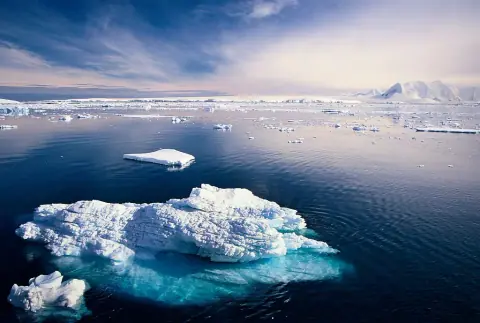
Antarctic Peninsula, Antarctica
The Antarctic Peninsula, an extension of the continent of Antarctica towards South America, is a region of awe-inspiring beauty and significant scientific interest. This area is a prime destination for those looking to experience the unique and remote wilderness of the Antarctic.
The landscape of the Antarctic Peninsula is dominated by dramatic ice formations. Majestic icebergs of all shapes and sizes, towering glaciers, and expansive ice shelves create a surreal and otherworldly environment. The scenery changes constantly due to the dynamic nature of the ice, providing a unique experience for visitors. The Lemaire Channel, known as "Kodak Gap," is particularly famous for its photogenic and narrow passage flanked by steep cliffs of ice.
- Diverse Wildlife: The Antarctic Peninsula is home to an array of wildlife, including several species of penguins (like the Adélie and Gentoo), seals, and whales. The region provides opportunities for wildlife observation, especially during the austral summer months.
- Dramatic Ice Formations: The peninsula is characterized by its impressive icebergs, ice shelves, and glaciers. Visitors can witness these colossal ice formations up close, either from cruise ships or via zodiac boats.
- Scientific Research Stations: The peninsula hosts several research stations from different countries. These stations are involved in important scientific research, studying everything from meteorology to glaciology and marine biology.
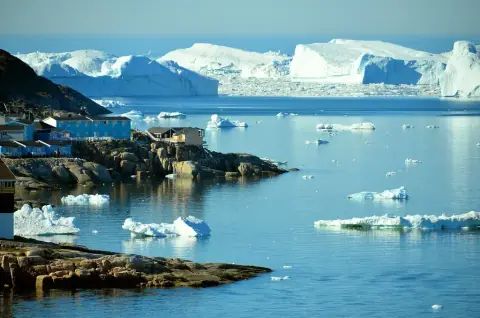
Ilulissat Icefjord, Greenland
Ilulissat Icefjord, situated in Greenland, is a majestic and surreal natural wonder, earning its place as a UNESCO World Heritage site. This Icefjord stands as one of the most spectacular locations on the planet to witness the grandeur and dynamism of icebergs in their natural environment.
Dominated by the enormous icebergs calved from the Sermeq Kujalleq glacier, one of the most productive glaciers in the Northern Hemisphere, the Icefjord presents a landscape that seems almost otherworldly. These massive blocks of ice, some as tall as skyscrapers, drift through the fjord, creating a constantly changing scene of awe-inspiring beauty. The way the light plays off the ice, especially during the long Arctic summer days, adds to the ethereal quality of the landscape, with hues of blue and white creating a mesmerizing spectacle.
- Spectacular Icebergs: Home to some of the world's most massive and breathtaking icebergs, calved from the Sermeq Kujalleq glacier, the Icefjord is a dynamic and visually stunning natural spectacle.
- Rich Cultural Heritage: The nearby town of Ilulissat offers deep insights into Inuit culture, showcasing traditional practices like dog sledding and providing a unique perspective on life in the Arctic.
- Nature Exploration: With opportunities for hiking and boat tours, visitors can experience the awe-inspiring beauty of the icebergs up close, making the Icefjord a prime destination for adventurers and nature enthusiasts.
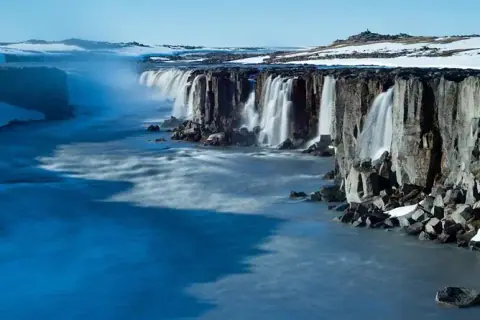
Vatnajökull National Park, Iceland
Vatnajökull National Park in Iceland is a mesmerizing landscape of contrasts and natural wonders, recognized for its remarkable geological features and breathtaking scenery. Spanning an impressive area, it encapsulates some of the most diverse and dynamic environments found in Iceland.
At the heart of the park lies the Vatnajökull glacier, Europe's largest ice cap, which forms a spectacular icy domain. The glacier's massive size and the ever-changing network of ice caves beneath its surface offer a glimpse into a frozen, translucent world. These ice caves, especially stunning in winter, are known for their ethereal beauty, with shimmering blue walls and intricate ice formations.
- Europe's Largest Glacier: The park is dominated by Vatnajökull, the largest glacier in Europe, offering stunning ice cap vistas, glacial lagoons, and ice caves that create an otherworldly landscape.
- Diverse Natural Phenomena: Beyond the ice, the park features active volcanoes, vast canyons, cascading waterfalls, and geothermal areas, showcasing Iceland's dramatic and varied natural beauty.
- Adventure and Exploration: Vatnajökull National Park is a haven for outdoor activities, including glacier hiking, ice caving, and wildlife watching, offering an immersive experience in one of the most unique natural environments on Earth.
Wrap Up
Earth is home to a vast number of places that can place you in another world. These spots are not just travel destinations; they are gateways to experiencing some of the most surreal and awe-inspiring destinations our planet has to offer.