A Rare Kind Of Dusty System
A young star first forms inside a gas-rich protoplanetary disk. As planets assemble, much of that material clears away. Some systems later develop a thinner secondary disk from fragments made when rocky bodies collide.
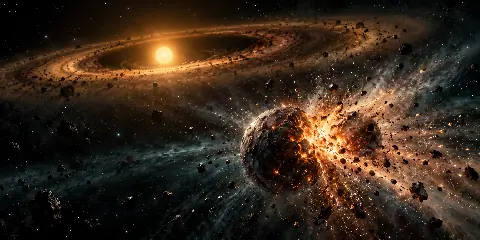
A small minority are extreme debris disks. NASA says only about one per cent of young stars show an observable signature of this stage. These systems concentrate a remarkable amount of warm dust at distances comparable with the rocky-planet region of our own Solar System.
The result helps put earlier snapshots of planet formation in context. Elias 2-24 b is still embedded in the material from which it formed. Extreme debris disks show a later, more destructive stage, after sizeable rocky bodies already exist and begin to strike one another.
Two Collision Signatures
| Dust Group | What Webb Measured | Interpretation Tested By The Team |
|---|---|---|
| Silica-rich | Dust with material related to volcanic glass. | Very energetic impacts between bodies on roughly the scale of Mars, capable of vaporising rock. |
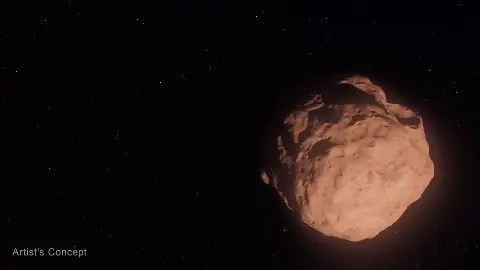
| Silica-poor | Dust dominated by minerals such as forsterite. | Lower-energy or grazing impacts between smaller bodies, closer to Moon-sized objects. |
The silica-rich disks appear only around stars younger than about 300 million years. The silica-poor disks span a wider age range and often show greater changes in infrared brightness.
Neither group supplies a photograph of an impact. Planetary embryos are too small and distant to watch directly in most systems. Their debris is the evidence astronomers can measure. The mineral groups suggest that extreme dust does not come from one simple chain of events.
A Better Comparison For Earth And The Moon
The Moon-forming impact is usually modelled as a collision between the early Earth and a Mars-sized body often called Theia. It remains a model for an event in our own system, not an object Webb has observed elsewhere.
The new survey gives that model a broader setting. Some young, silica-rich disks show the kind of high-energy aftermath expected from very large impacts. Other systems show a different path to abundant warm dust. Rocky-planet formation involved repeated collisions at different scales, unstable orbits and changing debris.
That is complementary to Hubble and Webb's study of tiny worlds beyond Neptune. Those icy objects preserve clues to early Solar System material and later reshuffling. Extreme debris disks show the destructive stage around other stars. Together they explain why a tidy-looking planetary system can retain a violent history.
What Webb Has Actually Added
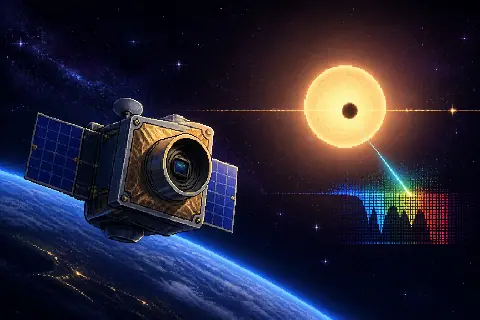
Webb did not discover the first extreme debris disk. Spitzer established the class years ago. Webb expanded the sample and sharpened composition measurements enough to test whether the disks belong to one family.
The answer appears to be no. The silica-rich and silica-poor populations have different age patterns and likely different collision histories. The work turns an unusual infrared glow into a specific scientific question: did high-energy impacts between large rocky bodies make this dust, or did a lower-energy encounter preserve more of its original mineral structure?
The sample is still small. NASA notes that only three disks in the current data set test the prediction that silica-rich systems should not persist at older ages. More observations are needed before that pattern is settled.
What To Watch Next
The next useful result will be more systems, especially older extreme debris disks. If their mineral signatures follow the proposed pattern, astronomers can better separate the high-energy assembly of rocky worlds from later orbital instability and smaller collisions.
For now, the survey offers a grounded version of a dramatic idea. Other planetary systems may still carry the dust of impacts powerful enough to remake worlds. Webb is reading the chemical record those collisions left behind.
Source Files
- NASA: Webb Provides Crash Course on Planet-Shattering Collisions - published and updated 1 October 2026.
- Su et al.: Extreme Debris Disks - research preprint reported by NASA as published in The Astrophysical Journal.
- NASA: Composition of Extreme Debris Disks Across Time - supporting data visualisation.