The Short Version
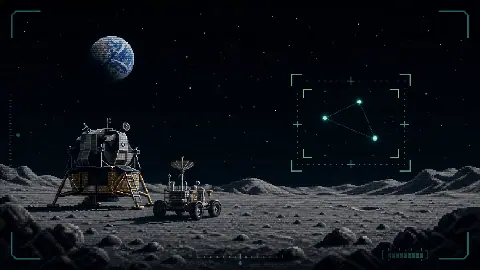
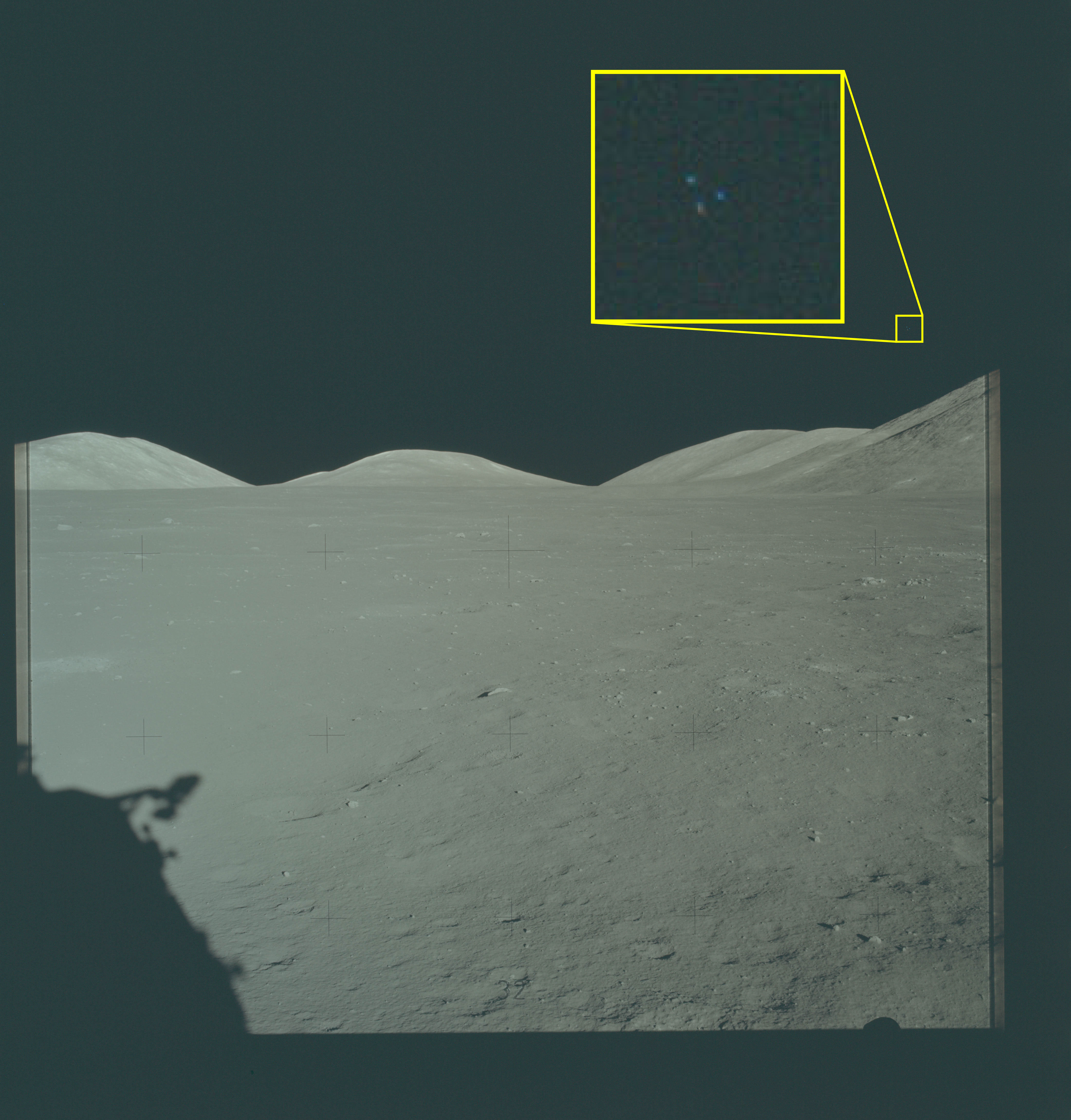
The Department of War describes NASA-UAP-VM6 as a photograph from the Apollo 17 mission, taken in December 1972, with three dots in a triangular formation in the lower right quadrant of the lunar sky. The release says the feature is visible under magnification, that there is no consensus about the anomaly, and that the government has obtained the original Apollo 17 film for further NASA and DOW analysis.
That combination is what makes the file article-worthy. It is not only an image. It is an image with an official unresolved-status note and a promised follow-up path. For readers tracking the best documented UFO cases, this one belongs in the evidence stack, but only with its uncertainty left intact.
The Signal In The Noise
| Evidence point | Evidence value | Reading caution |
|---|---|---|
| Known mission context | The image is tied to Apollo 17, the final crewed lunar landing mission of the Apollo program. | Mission context helps provenance, but it does not identify the dots. |
| Visible image anomaly | The release points to three dots in triangular formation in the lunar sky. | Small dots in old film can come from scene objects, reflections, scanning, dust, or processing artifacts. |
| Official case language | DOW says it opened a case to investigate the photograph and notes no consensus. | Opening a case means the feature is unresolved, not that it has been proven anomalous. |
| Original film review | The government says it obtained the original Apollo 17 film for further NASA and DOW analysis. | The decisive evidence would be the future analysis, not the highlighted public JPEG alone. |
What DOW Actually Says
The official caption is careful. It says the image has been previously released and discussed, that there is no consensus about the anomaly, and that preliminary U.S. government analysis suggests the feature is potentially the result of a physical object in the scene.
That wording is the hinge. "Potentially" is doing real work. The file does not say alien craft, non-human technology, or confirmed object. It says the feature may be physical rather than purely digital or interpretive. That is a much lower bar, but still a significant one for a historical lunar image.
What Would Make It Stronger?
The follow-up analysis should answer a few basic questions.
- Do the dots exist on the original film at the same positions and relative brightness?
- Are they present in adjacent frames or only in one exposure?
- Do they align with known Apollo 17 hardware, window reflections, film defects, or processing marks?
- Can the geometry be reconciled with a physical object in the scene rather than a mark on the film or scan?
- Is the triangular formation stable under higher-resolution inspection, or is it an artifact of magnification?
If the original film analysis shows the dots are physically present, coherent, and not tied to known mission hardware or image handling, the case becomes more interesting. If the dots vanish, shift, or match film damage or reflections, the story becomes a useful example of why original-source review belongs at the center of UFO investigations.
The Alien-Proof Problem
This is the part that keeps the article honest. A dot formation in a lunar photograph is not a spacecraft identification. It is an anomaly in an image. The release itself is written with caution, and old Apollo photography carries obvious artifact risks including window reflections, film grain, dust, scanning defects, lens behavior, compression, and mission hardware. That is the same evidence gap that sits beneath the broader question of whether UFOs are real.
The best reading is not "Apollo photographed aliens." A better reading is that the U.S. government has flagged a specific Apollo 17 image feature for formal analysis and says the original film is being reviewed. That is still a good story. It is just a better story when it stays inside the evidence.
Are There More Apollo 17 Images?
In Release 01, Apollo 17 appears to have one image file. That file is NASA-UAP-VM6, the photograph already shown above. The other Apollo 17 records in the release are documents rather than photographs, including the transcript and two debriefing excerpts.
There are plenty of Apollo 17 mission photographs in NASA and Apollo Lunar Surface Journal archives. Those are broader mission archives, not extra UAP-release images. They are still useful if we want to compare adjacent frames, camera magazines, lunar horizon views, or the original mission context around the VM6 photograph.
For a more modern media-led case from the same release, compare this image-first file with the Greece 2024 SWIR UAP video, where the public evidence includes a military clip and a companion mission report.
Apollo 12 Companion Images
The same release also includes five Apollo 12 image files with highlighted areas above the lunar horizon. These are useful companion visuals, but the captions explicitly say the images were modified to help viewers identify areas of interest and that the highlights do not constitute an analytical judgment. They are better read alongside other official files such as Project Condign, where cautious government language is part of the story.
| Image | Official file | Best use in an article |
|---|---|---|
| Apollo 12 VM1 | Open image | Context for how the release marks lunar-sky anomalies. |
| Apollo 12 VM2 | Open image | Comparison case with two highlighted areas. |
| Apollo 12 VM5 | Open image | Broader example of multiple marked lunar-sky features. |
Source Files
- NASA-UAP-VM6, Apollo 17 image
- NASA-UAP-D2, Apollo 17 Transcript, 1972
- NASA-UAP-D5, Apollo 17 Crew Debriefing for Science, 1973
- NASA-UAP-D6, Apollo 17 Technical Crew Debriefing, 1973
- Apollo 17 Image Library at the Apollo Lunar Surface Journal
- NASA Apollo Image Atlas
Verdict
This is a strong article candidate because it has a real image, a named NASA mission, cautious but intriguing official language, and a promised route to better evidence. The responsible headline is not that Apollo 17 proves aliens. The responsible headline is that DOW opened a case on a triangular-dot anomaly in an Apollo 17 image and says original film analysis is underway.