What Was Released On 10 July 2026
The Department of War described the July publication as the fourth release of declassified and historical UAP files under the Presidential Unsealing and Reporting System for UAP Encounters, known as PURSUE. The announcement attributes the statement to Pentagon spokesman Sean Parnell and says more files will follow on a rolling basis.
Release 04 follows the initial May archive, a second tranche on 22 May and PURSUE Release 03 on 12 June. The cadence has turned the portal into a growing public database rather than a single declassification event. The May 2026 UFO files guide covers the first tranche and the structure PURSUE introduced.
The Release 04 page initially highlights 10 records in its carousel and first database page. That is only the featured layer. Filtering the official database by Release 04 returns 40 files. Headlines built from the 10 visible cards undercount the release by 30.
The Release In Numbers
Release 04 is dominated by Department of War material, but four other agencies contribute records. The file and agency counts below come from the official database after applying the Release 04 filter.
| Measure | Release 04 Count |
|---|---|
| Total records | 40 |
| PDFs | 14 |
| Videos | 19 |
| Still images | 3 |
| Audio files | 4 |
| Department of War records | 28 |
| NASA records | 7 |
| Department of Energy records | 2 |
| CIA records | 2 |
| FBI records | 1 |
The date range stretches from 1948 to 2025. The modern side is concentrated in short military sensor clips from the Middle East, the Yellow Sea, the South and East China seas, the Atlantic Ocean and the United States. The historical side includes early Air Force flying-object studies, Project Sign, Project Blue Book correspondence, CIA files, an FBI correspondence file and NASA debriefings.
The 40 Files Split Into Four Evidence Buckets
The archive becomes easier to evaluate when each format is given its own evidentiary job.
| Evidence Bucket | What It Can Establish | Main Limitation |
|---|---|---|
| Historical documents | What an agency recorded, discussed or assessed at a particular time | An official document can preserve an unresolved report without proving its cause |
| Modern videos | That a sensor or camera recorded a contrast source during a reported event | Public clips often lack range, calibration, platform geometry and full telemetry |
| NASA images | The appearance and relative movement of an object across a short sequence | A visual sequence may not identify size, distance or origin |
| Audio debriefings | What astronauts said during formal post-mission discussions | Testimony needs mission context and supporting records before an object can be identified |
This four-bucket model prevents a common archive error. A 1949 intelligence study, an eight-second infrared clip and an astronaut debriefing can all be genuine government records while carrying very different information.
The Three Featured Historical Documents
Three documents lead the Release 04 carousel. Together they show how early US officials moved between scientific discussion, foreign-technology threat assessment and a formal Air Force investigation programme.
The 1949 Los Alamos Green Fireball Conference
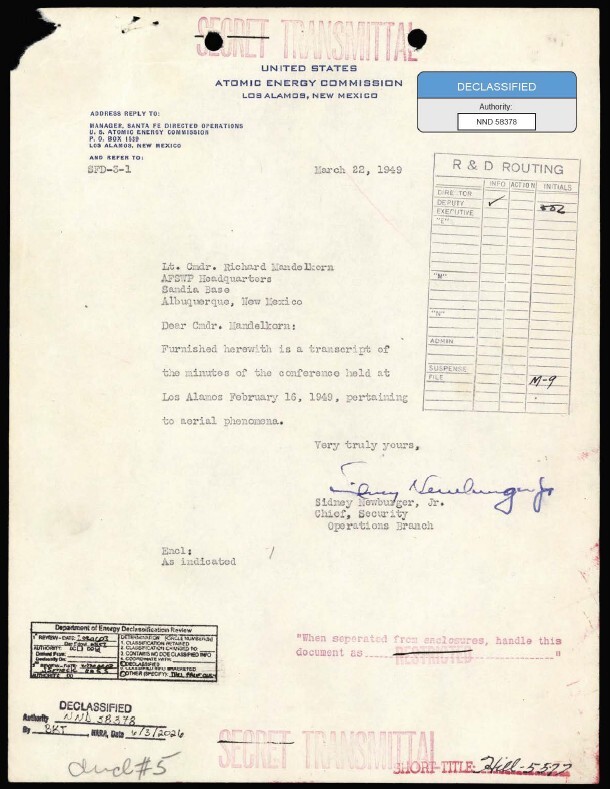
DOE-UAP-D004 is a transcript of a 22 March 1949 conference at Los Alamos Scientific Laboratory. Scientists and physicists gathered to discuss green fireballs reported for several months around the laboratory. The participants included figures associated with the Manhattan Project, among them Edward Teller, while meteor expert Lincoln LaPaz argued that the reported behaviour did not fit familiar meteorite falls.
The conference did not reach a single attribution. A shallow-angle, high-altitude meteor hypothesis remained in play. Teller also considered an electron phenomenon if the source was not a material body. That mix of competing ideas places the file beside the longer history of the New Mexico green fireballs rather than turning the transcript into a solved case.
The document is valuable because it preserves disagreement. Experienced scientists were willing to consider atmospheric, meteoric and less familiar mechanisms, but the conference record did not produce a decisive test or conclusion.
The 1949 Air Intelligence Study
DOW-UAP-D094 contains the Air Intelligence Division study Analysis of Flying Object Incidents in the United States, dated 28 April 1949. Its central assessment says that “some object has been seen”, while acknowledging that identification could not readily be accomplished.
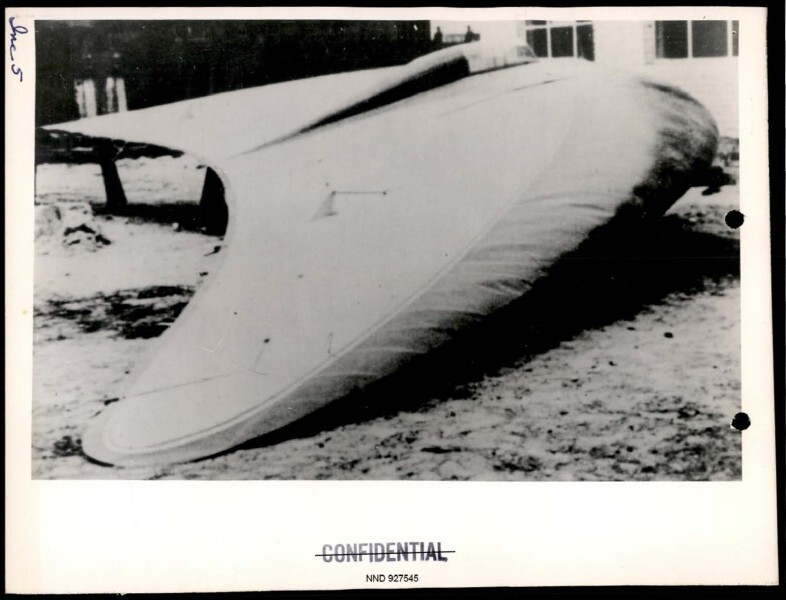
The study considers domestic and foreign technology as two reasonable origins. In the early Cold War setting, the foreign-technology branch meant treating Soviet scientific, military or intelligence activity as a possible threat. The file also includes selected reports and experimental flying-wing designs that might account for some descriptions.
The portal adds an AARO note that D094 appears to be a later revision of DOW-UAP-D093, a substantively similar 1948 study also included in the tranche. Readers can therefore compare two stages of the same institutional analysis instead of reading one version in isolation.
The Project Sign Progress Report
DOW-UAP-D097 is an early Air Materiel Command progress report on Project Sign, the 1948 to 1949 Air Force programme that preceded Project Grudge and Project Blue Book. The portal description says the report covers 100 sightings from 1947 and 1948. It also contains an article from The Aeroplane titled “The Biology of the Flying Saucer”.
The file gives Release 04 a direct connection to the first organised Air Force attempt to investigate the post-war flying-saucer wave. Later official programmes changed names and methods, but the same basic problem remained. Investigators had to sort weak observations, possible aircraft, astronomical objects, rumours and a smaller unresolved remainder.
The Four Featured UAP Videos
Four current or recently transferred sensor clips anchor the visual side of Release 04. The official descriptions consistently use the phrase “area of contrast”. That wording describes what the sensor displays without assigning a physical identity to the source.
Yellow Sea, 2025
DOW-UAP-PR104 is an 18-second infrared clip submitted by United States Indo-Pacific Command. From roughly one to 15 seconds, the sensor tracks an area of contrast that resembles a six-pointed star and keeps it near the centre of the display.
The star-like shape is visually striking, but infrared imagery can reflect optics, focus, digital processing and the way a bright source spreads across a sensor. The public description does not provide range, physical dimensions, speed or corroborating radar. The stable claim is narrow. A military infrared system tracked a contrast source, and the released data did not support a definitive identification.
East China Sea, 2025
DOW-UAP-PR105 runs for five minutes. The description says an infrared sensor tracks a contrast source during the first two minutes and five seconds. The operator changes zoom and pans repeatedly, while the source intermittently loses distinctiveness against the background. The remaining section contains sensor movement and zoom changes without useful subject content.
This is the most sustained featured clip, but duration does not automatically add measurement quality. The source moves in and out of the sensor field, and the public portal does not supply a range solution, platform track or raw sensor metadata. The video is useful for studying acquisition and tracking behaviour. It is weaker for calculating the object's real-world motion.
Western United States, 1996
DOW-UAP-PR113 has the weakest public provenance statement of the four featured clips. The Navy UAP Task Force transferred it to AARO in 2022, but the footage was likely captured in 1996. The portal says no formal UAP record-handling practices existed when the media was created and that the file had been digitally altered before UAPTF received it.
Only a few seconds show the original event. An area of contrast crosses the frame from upper right to lower left between approximately 14 and 17 seconds. The rest of the 2 minute 57 second file repeats the sequence frame by frame, replays it at a slower speed and holds on a selected frame.
The alteration note changes how the clip should be used. It can preserve the version AARO received, but the public file does not provide an original recording for frame-level forensic work. Analysts cannot assume that repeated frames, timing or compression characteristics belong to the source capture.
Gulf Of America, 2019
DOW-UAP-PR115 is an eight-second Air Force infrared clip. A contrast source appears near the centre of the display, partly obscured by head-up display elements. The sensor then zooms and pans while the source appears to flicker.
AARO adds a specific sensor caution to this record. Infrared systems apply auto-gain control to maintain contrast. When a source is close in temperature to its surroundings, dynamic gain adjustments can make it blend into the background or appear to flicker. That does not identify the source. It does show that the flicker cannot safely be treated as physical pulsation without the underlying sensor data.
The NASA STS-80 Image Sequence
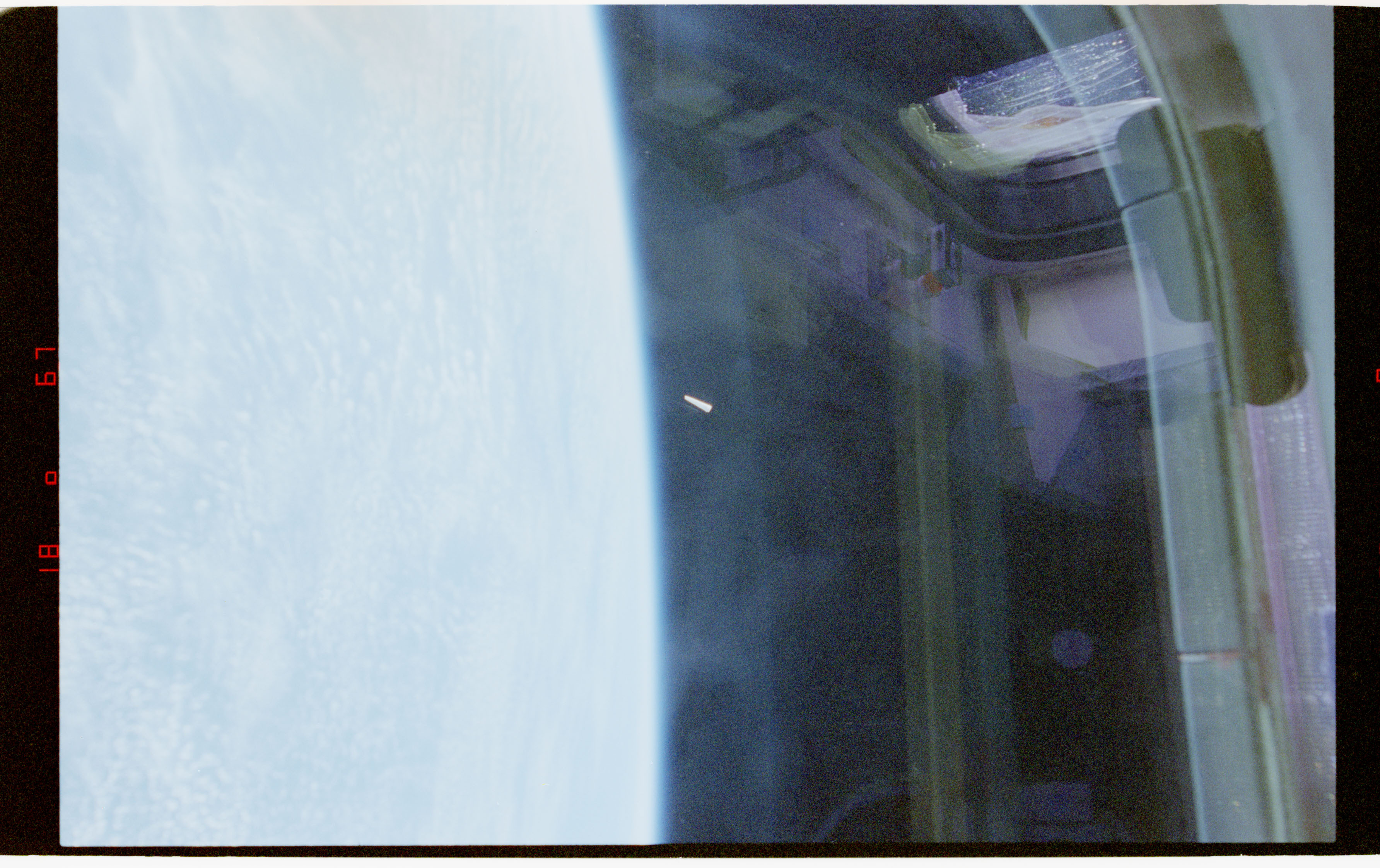
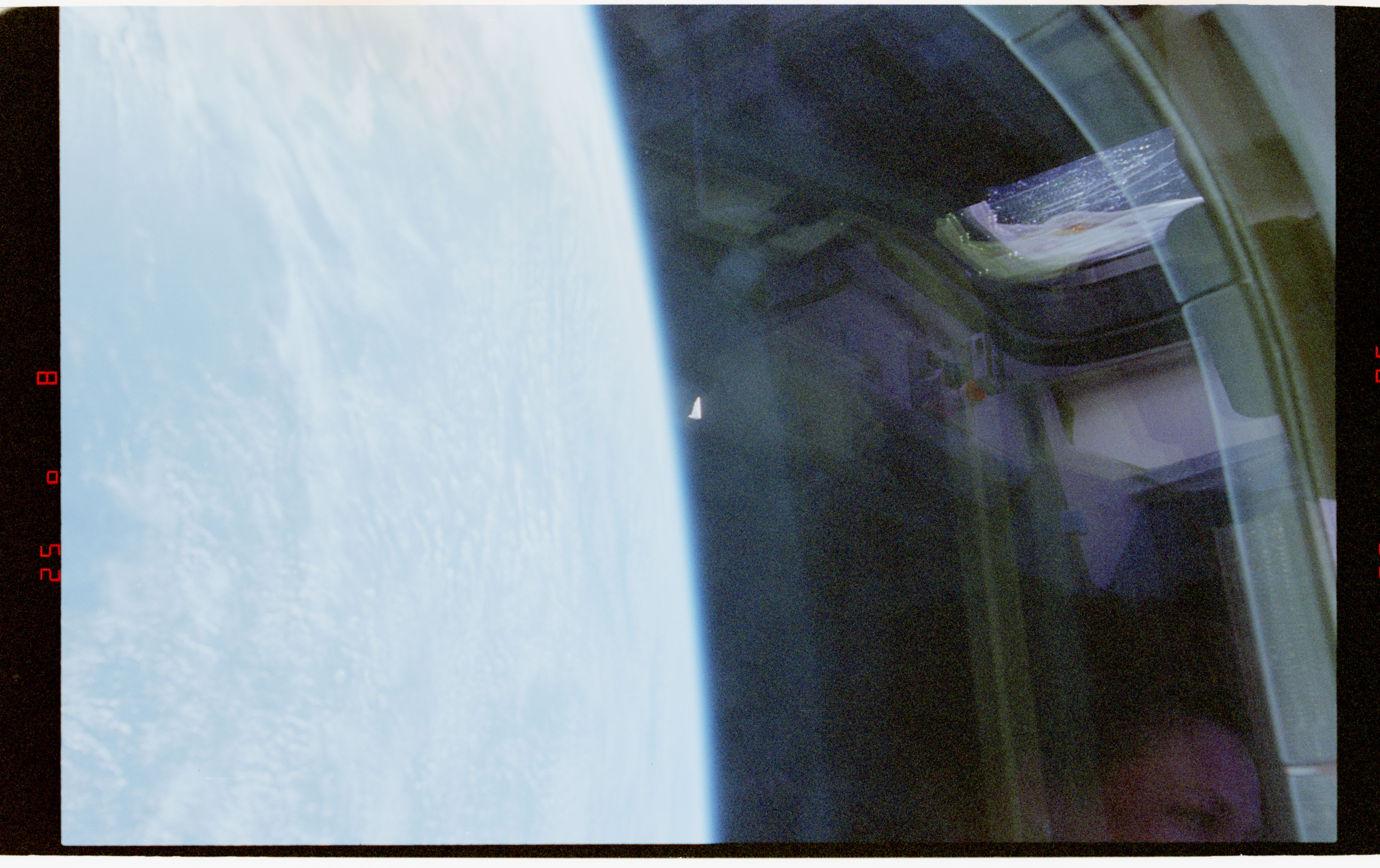
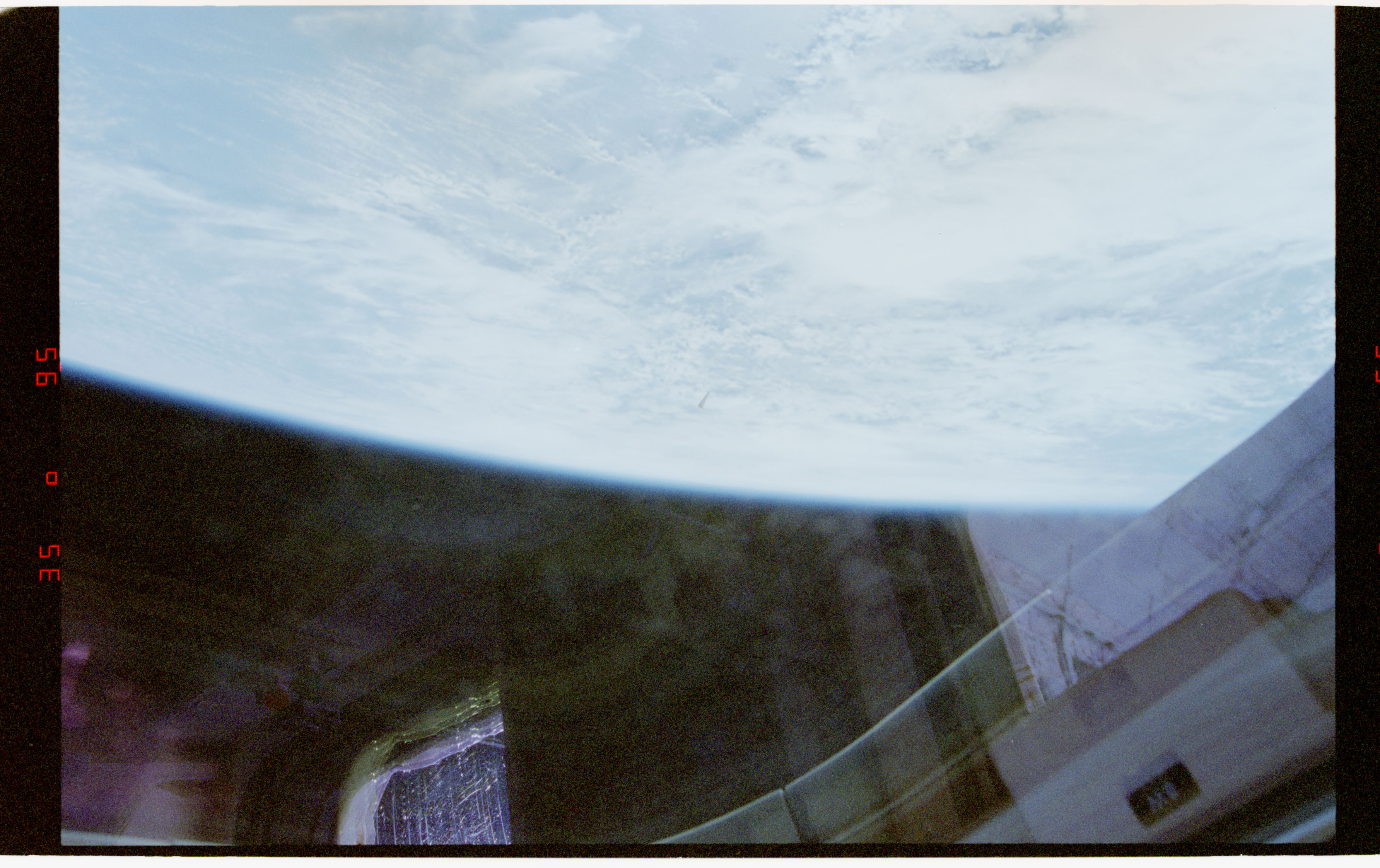
NASA contributes three still images of the same unidentified object photographed during Space Shuttle Columbia mission STS-80, which flew from 19 November to 7 December 1996. The three records are NASA-UAP-D030, D031 and D032.
The sequence supplies more information than a single frame. In the first image, the object appears to the right of Earth's limb. The second shows an apparent rotation or tumble around its major axis, behaviour consistent with a free-floating object. In the third, the object is superimposed against Earth and appears to continue along a path between Columbia and the planet.
That movement supports the description of an object in low-Earth orbit. It does not establish scale or artificial origin. Identification would require timing, camera geometry, adjacent frames and mission records. The wider relationship between NASA and government UAP study is covered in the NASA UAP guide.
The Other 30 Files In The Tranche
Thirty Release 04 records sit outside the featured carousel. They broaden the tranche from four clips and six highlighted documents or images into a cross-agency collection.
Modern Military Reports And Videos
The modern set includes a 2015 Department of Energy incident report from Pantex, three range-fouler debriefs and 15 additional military videos.
| Record Group | Incident Date Or Period | Location |
|---|---|---|
| DOE-UAP-D005, Pantex unidentified object incident report | 1 September 2015 | Texas |
| DOW-UAP-D089 to D091, range-fouler debriefs | 2019 to 2020 | Eastern US and Atlantic Ocean |
| DOW-UAP-PR024 and PR030 | 2023 | Middle East |
| DOW-UAP-PR100 | 2023 | Yellow Sea |
| DOW-UAP-PR101 | 2024 | South China Sea |
| DOW-UAP-PR102 and PR103 | 2024 | East China Sea |
| DOW-UAP-PR106, PR107 and PR110 | 2020 | Eastern US |
| DOW-UAP-PR108 | 2020 | Western US |
| DOW-UAP-PR109 | 2015 | Eastern US |
| DOW-UAP-PR111 and PR112 | 2019 to 2020 | Eastern US |
| DOW-UAP-PR114 and PR116 | 2016 and 2020 | Atlantic Ocean |
These records provide geographic and temporal breadth, but the database titles alone do not tell readers how strong each event is. The next stage is record-level inspection. A clip with a known sensor, continuous tracking and a companion report deserves more weight than a context-poor video inherited from an older file share.
CIA, FBI And Historical Defence Records
Seven additional historical PDFs cover several phases of official UFO interest.
- CIA-UAP-D020 and D021 concern unconventional aircraft sightings in 1955, including a file linked to Azerbaijan.
- DOW-UAP-D092 records an Air Force committee review of Project Blue Book in 1966 and 1967.
- DOW-UAP-D093 is the 1948 version of the flying-object intelligence study later revised as D094.
- DOW-UAP-D095 covers joint US-Canadian aviation projects and UFO reports from 1954 and 1955.
- DOW-UAP-D096 contains correspondence relating to Project Blue Book in 1955.
- FBI-UAP-D014 contains correspondence associated with sightings in 1967 and 1974.
This group belongs in the history of government handling rather than a single chain of evidence. It shows how reports moved among intelligence, defence and law-enforcement systems over several decades. The broader institutional sequence is mapped in the US UFO investigations overview.
NASA Apollo Audio
Four NASA audio records complete the tranche. NASA-UAP-D026 and D027 are parts of an Apollo 14 debriefing dated 18 February 1971. NASA-UAP-D028 and D029 are parts of the Apollo 17 crew medical debriefing dated 21 December 1972.
The audio files deserve transcript-led analysis. A searchable transcript can separate a passing remark, a crew observation, a medical discussion and later interpretation. Audio alone can preserve tone and wording, but identification still depends on mission time, spacecraft position, known hardware and related logs.
What The Unresolved Label Means
The PURSUE portal defines these materials as unresolved because the government cannot make a definitive determination about the observed phenomena. It also names insufficient data as one reason a case can remain open.
That definition sets a boundary around every Release 04 headline. Unresolved is a status, not a category of object. The label can cover a distant light, an optical effect, an aircraft viewed under unusual conditions, sensor behaviour, incomplete records or a genuinely unexplained observation. It records a gap between the available data and a confident attribution.
The same discipline applies to declassification. Release shows that a file can now be made public. It does not certify every claim inside the file, improve weak provenance or supply missing measurements. AARO's role is described in more detail in the guide to the US UAP office.
How PURSUE Fits With AARO And The National Archives
PURSUE, AARO and the National Archives provide related but distinct public access paths.
PURSUE was announced in 2026 as a government-wide effort led by the Department of War with support from the Office of the Director of National Intelligence. Its portal says dozens of agencies are reviewing records for rolling release under the presidential directive.
AARO is the office responsible for receiving and analysing UAP reports within its statutory mission. It publishes imagery, case-resolution reports, historical records and information papers. A file may appear through PURSUE while AARO continues separate analytical or reporting work.
The National Archives' Record Group 615 UAP collection comes from sections 1841 to 1843 of the 2024 National Defense Authorization Act. NARA says agencies must transfer digital copies of publicly releasable UAP records and that the collection will grow as new agency transfers arrive. Its agency transfer memorandum set a 30 September 2025 deadline for records identified by the statutory process.
The collections can overlap, but they should not be treated as interchangeable labels. PURSUE is the 2026 rolling release portal. RG 615 is the statutory National Archives collection. AARO remains the specialist UAP office and analytical publisher.
What The Fourth Release Adds To The Public Record
Release 04 adds a stronger bridge between the early flying-saucer record and current military sensor reporting. The Los Alamos transcript, two versions of the Air Intelligence study and the Project Sign report show officials grappling with the problem in 1948 and 1949. The modern clips show the same classification problem inside infrared and electro-optical systems.
The release also improves source access. Readers can open record descriptions, view official stills, watch DVIDS-hosted media and download the tranche in bulk. Stable government URLs make it easier to preserve exact wording and compare later analysis with the original publication.
Cross-agency range is another addition. Release 04 brings Department of Energy, Department of War, CIA, FBI and NASA records into one filterable set. That does not create a unified explanation. It gives researchers a clearer map of where the records came from and which agency held each file.
What Is Still Missing
Most modern videos remain difficult to analyse outside government because essential measurement data is absent from the public page.
- Full sensor metadata and calibration details
- Platform position, attitude and flight path
- Reliable range to the observed source
- Raw frames before editing, cropping or transcoding
- Radar or other independent sensor tracks
- Complete chain-of-custody records for inherited media
- The analysis that kept each case in unresolved status
- Unredacted location detail where public release would be safe
PR113 demonstrates the provenance problem directly. AARO received an altered file decades after the likely capture date. PR115 demonstrates the sensor problem. Auto-gain control can change the apparent visibility of a thermal source. In both cases, the public video is a starting record rather than a complete physical reconstruction.
How To Inspect The Files Yourself
The most reliable reading process begins with the record type and ends with the missing data.
- Open the Release 04 portal and apply the Release 04 filter. The default view includes all PURSUE releases.
- Record the file ID, agency, incident date, location and media type before watching or reading.
- Read the official description once without interpreting the object. Note the exact verbs used, such as tracked, appeared, reported or assessed.
- For video, separate sensor movement from subject movement. Look for zoom changes, panning, modality changes and dropped tracking.
- For historical documents, distinguish a reported claim from an analyst's conclusion and from an editor's later note.
- Follow related-media links. Several Release 04 files are revisions, companion images or parts of one debriefing.
- Write down the measurements needed for identification. Range, angular size, platform motion and time are usually more useful than the shape of a bright blob.
- Revisit the file if AARO publishes a resolution or the portal adds metadata. An unresolved status can change when better data appears.
Frequently Asked Questions
How Many Files Are In PURSUE Release 04?
PURSUE Release 04 contains 40 records. The official database lists 14 PDFs, 19 videos, three images and four audio files from five agencies.
Does Release 04 Prove That UAP Are Alien Craft?
No. Release 04 documents unresolved observations and historical government work. The published files do not establish an extraterrestrial origin. Several records lack range, raw sensor data, complete provenance or independent corroboration.
Where Can I Download The Fourth UAP Release?
The Department of War portal links a 227 MB Release 04 document bundle and a 1.4 GB Release 04 video bundle. Individual records are also available through the Release 04 database.
Why Are Some Details Redacted?
The portal says redactions protect eyewitness identities, government-facility locations and sensitive information about military sites that is unrelated to the UAP itself. Redaction can protect legitimate interests while also limiting outside reconstruction of an event.
Source Trail
- Department of War Release 04 announcement, 10 July 2026
- Official PURSUE archive and Release 04 database
- DOE-UAP-D004, Los Alamos Conference on Aerial Phenomena
- DOW-UAP-D094, Analysis of Flying Object Incidents
- DOW-UAP-D097, Project Sign Progress Report
- DOW-UAP-PR104, Yellow Sea, 2025
- DOW-UAP-PR105, East China Sea, 2025
- DOW-UAP-PR113, Western United States, 1996
- DOW-UAP-PR115, Gulf of America, 2019
- NASA-UAP-D030, D031 and D032 STS-80 image records
- National Archives Record Group 615 UAP collection
- National Archives UAP transfer memorandum AC 04.2025
- AARO UAP records and information papers