What Is A Culture Bringer?
A culture bringer or culture hero is credited with establishing practices such as agriculture, fire, law, writing, ritual, navigation or craft. The figure may be divine, ancestral, animal, royal, rebellious or foreign.
The Oxford Classical Dictionary entry on culture-bringers traces how gods and heroes were credited with inventions in classical traditions. The category describes a story role, not a biological species or a shared origin.
Named Examples And Their Differences
| Figure or group | Knowledge association | Source caution |
|---|---|---|
| Prometheus | Fire and skills in Greek tradition | A divine transgressor, not simply a visitor from the sky |
| Oannes | Arts and ordered life in Berossus fragments | Known through later transmission of a lost Babylonian history |
| Quetzalcoatl | Learning, priesthood, wind and rulership across Mesoamerican traditions | Different periods and cultures cannot be collapsed into one biography |
| Watcher figures | Forbidden arts in 1 Enoch | The teaching is portrayed as corrupting, not a neutral civilising mission |
| Nommo | Order and ancestral knowledge in published Dogon accounts | The Sirius and alien synthesis has a disputed ethnographic history |
Prometheus: Fire As A Civilising Gift
Greek accounts associate Prometheus with stealing fire for humanity and, in some versions, teaching or enabling civilised arts. Fire condenses cooking, metallurgy, warmth and transformation into one powerful gift.
An ancient alien retelling may turn the theft into a transfer of advanced energy technology. The original story's divine conflict, sacrifice and punishment provide a complete mythic context without requiring an aircraft or off-world civilisation. See the Britannica overview of Prometheus for the main classical traditions.
Oannes: A Teacher From The Sea
Berossus, a Babylonian priest writing in Greek in the third century BCE, described Oannes as a fish-associated being who emerged from the sea and taught people letters, arts, settlement and law. His original work is lost and survives through quotations and summaries by later authors.
Oannes is frequently paired with Mesopotamian apkallu and then described as an amphibious alien. The source chain permits a discussion of a water-associated teacher. It does not remove the gap between Berossus, earlier Mesopotamian traditions and the modern biological interpretation.
Apkallu And Mesopotamian Wisdom
Mesopotamian traditions describe apkallu as sages associated with primeval kings, ritual expertise and protective knowledge. Some were represented with fish cloaks or bird-like features in first-millennium Assyrian art.
Modern lists often identify every fish-cloaked figure as Oannes and every winged figure as a flying visitor. The iconography instead belongs to established ritual and royal settings. The link to sky teachers is comparative: specialised knowledge is embodied in extraordinary sages.
Quetzalcoatl: Why One Name Is Not One Story
Quetzalcoatl appears across Mesoamerican religious and political histories with associations including wind, priesthood, learning and rulership. Colonial-era accounts, earlier imagery and later popular legends do not all describe the same episode.
Claims that a pale visitor arrived from overseas and single-handedly taught civilisation often rely on colonial or post-conquest simplification. The Britannica Quetzalcoatl reference illustrates the figure's changing roles across cultures and periods.
Why Knowledge Gifts Resemble Technology Transfer
Modern societies divide knowledge into scientific disciplines and imagine innovation through inventors, laboratories and technical instruction. It is natural for modern readers to translate a divine gift into the arrival of a specialist with superior tools.
Myths can also compress generations of observation and exchange into one founder. Agriculture, calendars and metallurgy develop through communities, experimentation, migration and teaching. A culture-bringer gives that long process a memorable identity and moral meaning.
Not Every Gift Is Beneficial
Prometheus helps humanity but is punished. The Watchers teach arts linked with corruption and violence. Trickster figures may obtain knowledge through theft. Culture-bringer stories therefore ask who controls knowledge and what its acquisition costs.
Ancient alien summaries often remove that moral structure and keep only the transfer. Restoring the consequences shows why "an advanced teacher arrived" is too narrow a description of many sources.
Evidence Beyond The Story
If a teacher introduced agriculture, metalworking or writing at a specific moment, archaeology should show the relevant plants, tools, production debris, inscriptions and chronology. In most cases, the material record shows development, regional exchange and adaptation rather than a single unexplained delivery event.
The story can preserve social memory without functioning as a literal technical report. Its historical value and its truth within a tradition do not depend on an extraterrestrial identity.
Four Checks For A Sky Teacher Claim
- Direction: did the figure actually come from the sky, or from the sea, earth, underworld or local ancestry?
- Source date: is the account ancient, colonial, modern or reconstructed from fragments?
- Knowledge type: is the gift a ritual, crop, law, craft or technical process?
- Independent evidence: does archaeology show an unexplained discontinuity or only impressive human development?
When Comparison Becomes Flattening
A global list can make unrelated figures appear interchangeable. Prometheus, Oannes, Quetzalcoatl, the Watchers, Nommo and Hopi helpers come from different languages, moral systems and source histories.
Comparison is strongest at motif level: who gives knowledge, what is given, how the gift changes society, and whether it is celebrated or punished. It becomes weak when every more-than-human teacher is assigned the same extraterrestrial identity.
Follow The Source Trails
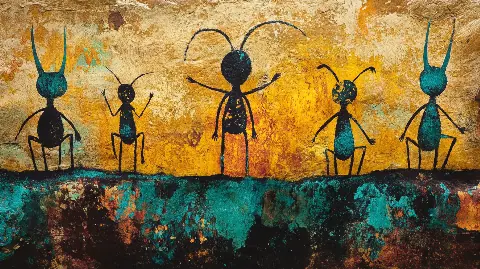
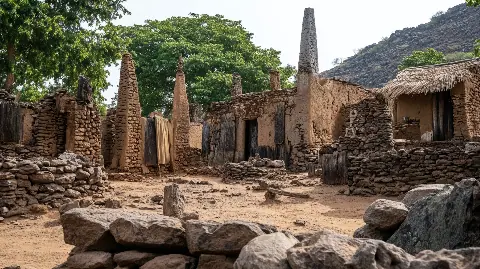
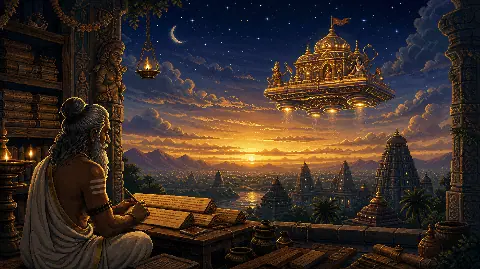
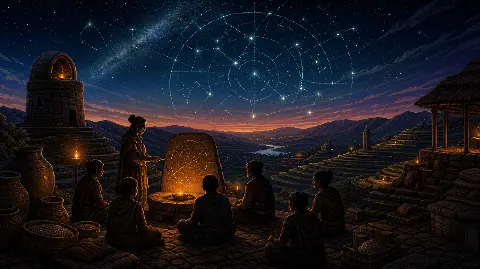
Read the specific evidence for the Watchers, Dogon Nommo traditions, Hopi Ant People retellings and vimana claims. The foundational narratives map places them in chronological context.
Sources And Further Reading
- Oxford Classical Dictionary: Culture-bringers
- Encyclopaedia Britannica: Culture hero
- Encyclopaedia Britannica: Prometheus
- Encyclopaedia Britannica: Quetzalcoatl
FAQs
Are Sky Teachers Found In Every Culture?
Many cultures have founders or knowledge-givers, but not all come from the sky and they do not form one universal category.
Is Oannes An Ancient Alien?
Berossus described a fish-associated civilising figure. Identifying Oannes as an extraterrestrial is a modern interpretation of a source preserved only indirectly.
What Would Show That Knowledge Came From Visitors?
A strong case would need clear source language, securely dated material technology and independent evidence that cannot be explained through known human development or cultural exchange.