What The Council Is
The UAP Science Advisory Council is being described as a multidisciplinary outside advisory group for U.S. government UAP work. DefenseScoop reported that it will provide scientific guidance to government investigations and support a higher-level UAP Governance Board connected to military, law enforcement, intelligence, and civilian agencies.
That makes it different from AARO. AARO is the government office responsible for coordinating UAP work across domains. The council is advisory. It can recommend how to interpret records, how to collect better data, and how to approach unresolved cases, but it does not replace the office that owns the government process.
The public-access limit is central. Loeb told DefenseScoop that all data shared with the council will be unclassified. Scientific American also reported that the council is not expected to have access to classified UAP material and will focus on archival material, including the recent Pentagon releases. That keeps the work closer to public science, but it also limits what the council can settle if key sensor records remain classified.
Why Avi Loeb Is The Flashpoint
Loeb is a Harvard astrophysicist, former chair of Harvard's astronomy department, and founder of The Galileo Project. He is also one of the most polarising scientists in the modern alien-life debate because he has argued that some interstellar objects deserve technological explanations as live hypotheses.
That reputation cuts both ways. It gives the council a recognisable scientific lead who already talks in terms of instruments, observations, outliers, and physical evidence. It also brings immediate criticism from scientists and skeptics who think Loeb has repeatedly pushed speculative alien explanations too far ahead of the evidence.
The best way to read his appointment is not as confirmation of his past claims. It is a bet that a scientist known for pushing unusual hypotheses can still help build a more disciplined evidence pipeline. Whether that bet works depends on the data, the methods, and the public output.
Who Is Involved
Loeb's June 16 post listed members and expertise across statistics, anomaly identification, AI, psychology, oceanography, physics, biology, materials science, anthropology, instrumentation, and skeptical review. DefenseScoop later named several of the same early participants, including Tim Gallaudet, Garry Nolan, Michael Shermer, Matthew Szydagis, Jennice Vilhauer, Ben Lamm, Peter Skafish, Carol Cleland, Richard Cloete, Omer Eldadi, Devesh Nandal, and Ross Howard.
| Area | What It Adds | What To Check Later |
|---|---|---|
| Instrumentation | Sensor design, calibration, imaging, and motion analysis. | Whether the council publishes repeatable methods. |
| Data and AI | Classification, outlier detection, and large-scale review of records. | Whether models are audited against false positives. |
| Psychology | Witness reporting, stigma, perception, and reporting behaviour. | Whether testimony is separated from physical evidence. |
| Skepticism | A direct challenge to weak claims and groupthink. | Whether dissent appears in public outputs. |
| Materials and biology | Expert review if physical samples or biological claims enter the record. | Whether provenance and custody are documented. |
The Fast Read
| Question | Public Answer | Unresolved Piece |
|---|---|---|
| Is the council official? | Reporting describes it as an advisory group supporting U.S. government UAP work. | A full public charter has not been posted. |
| Does it prove alien craft? | No. It is a review and advisory structure. | Evidence still has to be shown case by case. |
| Will it see classified data? | Public statements point to unclassified data. | Classified sensor context may still sit outside public science. |
| What will it work on? | Public records, UAP releases, data methods, and scientific recommendations. | The first formal dataset and first public report are still pending. |
| What would make it credible? | Clear methods, source files, error checks, and publishable analysis. | Peer review and independent replication have to follow. |
How This Connects To PURSUE And AARO
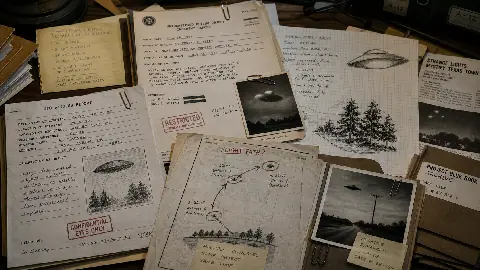
The council appears during the same window as the 2026 UAP file releases. PURSUE batches were released on May 8, May 22, and June 12, with official records, videos, narratives, and older historical material entering a public portal. Loeb has pointed to those releases as part of the source material around the council's work.
AARO remains the institutional centre of the current U.S. UAP process. Its public site describes the office as leading government UAP work with a scientific framework and data-driven approach. The council is being attached to that world as a scientific advice layer, not as a replacement records office.
The proposed records board amendment points in a neighbouring direction. If a law creates stronger preservation and National Archives review rules, the archive side of UAP disclosure gets more formal. If the council produces methods for analysing those records, the evidence side gets more testable. Those are separate jobs, but they depend on the same basic thing: records that can be inspected.
The Classified Data Problem
UAP stories often collapse because the public sees fragments while the strongest context stays out of reach. A video clip without sensor metadata can be strange and still scientifically weak. A witness report can preserve an honest observation without proving what caused it. A government release can confirm that a file exists without confirming the strongest claims people attach to it.
For the council, the classified-data limit creates a practical ceiling. If it only sees public or unclassified material, it can still improve methods, sort weak claims from stronger ones, and recommend better collection. It probably cannot settle a case that depends on classified platform data, radar records, collection geometry, or original chain-of-custody material.
That does not make the council pointless. It makes the output easier to judge. Strong work should show the source files, name the data gaps, separate observation from interpretation, and say exactly which claims survive ordinary explanations.
What Would Count As Stronger Evidence
The standard should be higher than a famous scientist finding a case interesting. UAP evidence gets stronger when independent records point to the same event, when instruments are calibrated, when raw data survives, and when ordinary explanations are tested before exotic ones are entertained.
For a physical craft claim, strong evidence would include high-resolution imagery, multi-sensor confirmation, reliable timing, known observer position, instrument details, environmental conditions, and custody for the original files. For a material claim, the test gets even harder: sample provenance, contamination control, isotopic analysis, independent labs, and open methods.
For a technology claim, the council would need to separate ordinary anomalous reports from possible technosignatures. A true technological signature is not just an object someone cannot identify. It is a measurable pattern, material, signal, or performance profile that resists known natural and human explanations after serious review.
What To Watch Next
- Whether the council publishes a public charter, roster, and scope.
- Whether the UAP Governance Board explains how it receives council advice.
- Whether the council releases datasets, methods, or only general statements.
- Whether its first report names specific source files and data gaps.
- Whether skeptical members sign the same conclusions or publish separate notes.
- Whether new PURSUE files include enough metadata for independent review.
- Whether any results move into peer-reviewed journals.
Source Trail
- DefenseScoop report on the UAP Science Advisory Council
- Avi Loeb's June 16 council details
- AP report on Loeb and the new UFO council
- Scientific American report on the council's scope and limits
- The Guardian profile on Loeb's role and critics
- AARO official site
- Department of War release on the public UAP files
Verdict
Avi Loeb's UAP Science Advisory Council should be treated as an evidence-processing story. It brings scientists, skeptics, data specialists, and UAP figures into a new advisory structure around government records. The result will not be judged by the title of the council or the fame of its chair. It will be judged by the records it can inspect, the methods it publishes, the claims it rejects, and the evidence it can put in front of the public.