What Johns Hopkins Reported
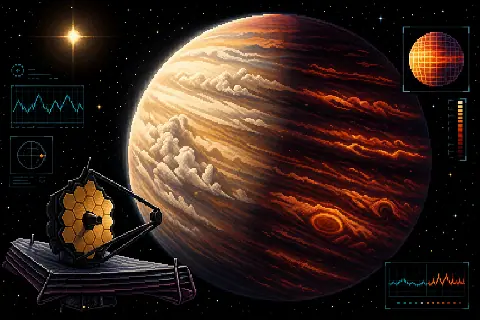
Johns Hopkins University published the finding on 21 May 2026. The team studied WASP-94A b, a gas giant in the constellation Microscopium nearly 700 light years from Earth.
WASP-94A b is a hot Jupiter, a massive gas planet orbiting extremely close to its star. These worlds are blasted by heat and radiation, which makes them harsh places and powerful natural laboratories for atmospheric science.
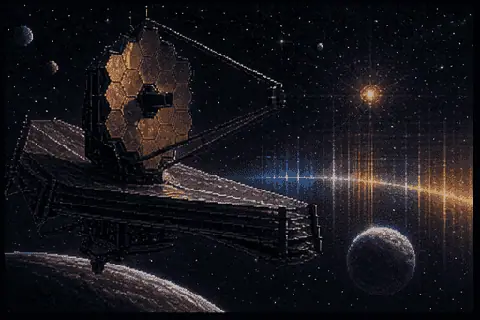
The new study used the James Webb Space Telescope to look at the planet during transit, when it crossed in front of its star from our point of view. Webb measured the leading edge and trailing edge separately, giving researchers a morning view and an evening view of the same planet.
Morning Clouds And Evening Skies
The morning side is the limb where air flows from the night side into daylight. Johns Hopkins reports that this side is thick with magnesium-silicate clouds, made from mineral material common in rock.
The evening side is where air flows from the day side toward night. That side appears much clearer, giving researchers a better look at the underlying atmosphere.
One explanation is strong winds lifting clouds on the cooler side, then driving them downward as air moves into hotter regions. Another is an extreme version of morning fog burning away. Clouds form in darkness, drift into day-side temperatures above 1,000 degrees, and vaporize as the chemistry heats up.
What Webb Added
Older observations blended clouds and atmosphere into an average view. That made the planet look chemically stranger than it may be. Earlier readings suggested WASP-94A b had hundreds of times more oxygen and carbon than Jupiter, which was difficult to fit into planet-formation models.
With the evening side separated out, the new analysis points to a composition much closer to Jupiter than expected, with about five times the oxygen and carbon. That is still enriched, but it gives modelers a far cleaner number to work with.
| Observation | What Webb sees | Research value |
|---|---|---|
| Morning limb | Clouds made from magnesium silicate. | Shows where clouds condense and hide atmospheric signatures. |
| Evening limb | Clearer skies after air crosses the hotter day side. | Lets researchers measure atmospheric chemistry with less cloud interference. |
| Planet chemistry | About five times Jupiter's oxygen and carbon abundance. | Brings WASP-94A b closer to standard planet-formation expectations. |
| Wider pattern | Similar cloud cycles seen on WASP-39 b and WASP-17 b. | Suggests the method can be used across other hot gas giants. |
The Alien Weather Angle
Hot Jupiters make the most sense as extreme atmosphere laboratories. Every improvement in cloud detection helps the wider exoplanet field, including smaller worlds where atmosphere, temperature, and chemistry become central to habitability debates.
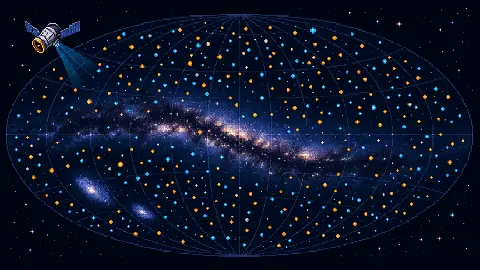
This connects directly to the target-building work behind NASA's TESS exoplanet sky map. TESS finds worlds and candidate systems. Webb turns selected targets into atmospheric stories with weather, chemistry, cloud behavior, and planetary history.
It also sits beside the public interest around JWST and K2-18 b. The lesson is broader than one planet. Clouds can hide or distort the signatures researchers care about, and sharper methods change the way scientists read alien skies.
What To Watch Next
- Whether the same morning-evening method works across more hot Jupiters.
- How the large JWST cloud-cycling program changes atmospheric models.
- Whether similar limb-splitting methods can help with smaller planets.
- How cloud chemistry changes readings of carbon, oxygen, methane, and water.
- Which TESS and Webb targets become the next useful comparison worlds.
Source Files
Verdict
JWST has turned WASP-94A b from a foggy average into a planet with a morning side, an evening side, and a visible cloud cycle. That is the kind of detail exoplanet science needs as it moves from finding worlds to reading them.