What Are Reptilian Aliens?
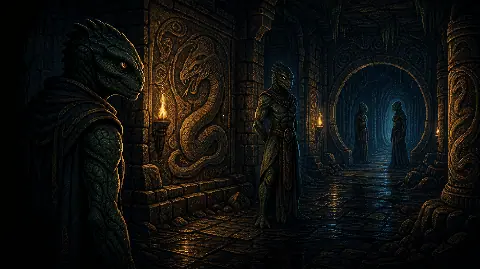
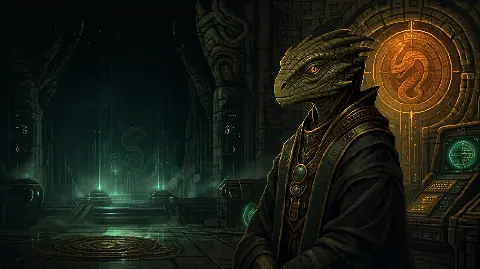
Reptilian aliens, also called reptoids, lizard beings, or reptilian humanoids, are usually described as intelligent beings with both human-like and reptile-like features.
In some accounts, they are physical extraterrestrials. In others, they are interdimensional entities, ancient Earth-based beings, shapeshifters, or a hidden species living alongside humanity.
The modern Reptilian idea is not one clean theory. It is a cluster of related claims:
- reptile-like humanoids encountered directly
- shapeshifting beings disguised as humans
- hidden elites controlled or influenced by non-human entities
- underground or ancient civilizations connected to reptilian beings
- symbolic interpretations of serpents, dragons, and lizard-like figures in myth
The topic gets messy because one word covers several different ideas. One person may mean a literal non-human species. Another may mean an occult force. Another may mean a political metaphor that has drifted into alien language.
The Common Reptilian Profile
Reptilian descriptions vary, but several traits appear repeatedly:
- humanoid body shape
- scaled, green, brown, or mottled skin
- slit-like or unusual eyes
- strong jaw or ridged face
- clawed hands
- physical strength
- emotional coldness
- interest in power, hierarchy, or control
- possible shapeshifting or human disguise
- underground, interdimensional, or off-world origin claims
The image works because reptiles already carry strong symbolic associations. Snakes, lizards, crocodiles, and dragons suggest age, danger, stealth, cold blood, predation, and survival.
Reptilian lore takes that symbolic charge and gives it a humanoid body.
Where The Reptilian Idea Comes From
The modern Reptilian alien idea grew from several streams that merged over time.
Older myth and religion contain serpent beings, dragons, naga, underworld creatures, and hybrid human-animal figures. Those are not automatically "alien reptilians," but they gave later writers a deep reservoir of imagery to draw from.
Modern science fiction added the idea of intelligent reptile people as literal species. UFO culture added extraterrestrial and interdimensional interpretations. Conspiracy culture added the claim that these beings hide inside political, financial, royal, or media power structures.
The result is a uniquely loaded alien type.
Grey aliens became the face of abduction. Reptilians became the face of hidden control.
David Icke And The Modern Reptilian Conspiracy
No modern figure is more associated with Reptilian conspiracy claims than David Icke.
Icke popularized the idea that shapeshifting reptilian beings, or bloodlines influenced by them, control major human institutions. His version mixes UFO belief, occult ideas, political suspicion, royal-family claims, media distrust, and hidden-elite narratives.
His version drove much of the topic's modern fame.
It is also why Reptilian lore has to be handled carefully. Once the story becomes "a hidden group controls the world," it can slide into older conspiracy patterns about secret elites, bloodlines, and coded enemies.
Otherworlders can take the possibility of non-human entities seriously without repeating every political claim attached to the Reptilian myth.
Reptilians, Serpent Beings, And Ancient Myth
Reptilian lore often borrows from ancient serpent and dragon imagery.
Serpent beings appear in many traditions: the naga of South Asian religions, dragon figures in East Asian and European stories, feathered serpents in Mesoamerican traditions, and snake-linked figures in Near Eastern myth.
Some writers connect those older stories to modern Reptilian claims. Others go further and fold the topic into ancient alien theory or speculative readings of Sumerian Anunnaki accounts.
The careful distinction is this: ancient serpent symbolism shows that humans have long imagined powerful reptile-like beings. It does not automatically prove that every ancient serpent story was a report of the same alien species.
Still, the repetition is interesting. Across cultures, reptile imagery is often tied to power, danger, wisdom, renewal, underworlds, or divine authority.
Modern Reptilian lore inherits that symbolic force.
Shapeshifting And Human Disguise
Shapeshifting is the detail that separates Reptilians from most other alien types.
In the strongest versions of the lore, Reptilians do not merely visit Earth. They hide here. They imitate humans, occupy positions of power, or reveal themselves only through glitches, altered eyes, strange behavior, or momentary slips.
This idea explains why Reptilian claims often focus on celebrities, politicians, royal figures, and media personalities. The story depends on public faces that can be reinterpreted as masks.
The shapeshifting claim also makes the theory hard to disprove inside its own logic. If the beings are defined by disguise, then lack of visible evidence can be folded back into the story as proof of their skill.
The useful work is separating direct encounter claims from online video analysis, political projection, and pattern-seeking around public figures.
Reptilians And Control Narratives
Reptilian lore is built around control.
The usual claims involve hidden influence over:
- governments
- financial systems
- media
- royal families
- secret societies
- military or intelligence structures
- human belief systems
This gives the mythology its emotional power. Instead of saying human institutions are complex, corrupt, or difficult to understand, the Reptilian story gives that complexity a face.
The risk is that a symbolic story about hidden power can become a literal accusation against real people or groups.
Reptilian content needs discipline at this exact point. The subject belongs to alien lore, paranormal belief, and conspiracy culture. It should not become a lazy container for blaming human communities.
Reptilians Compared With Other Alien Types
Reptilians make more sense when placed beside the other major alien archetypes.
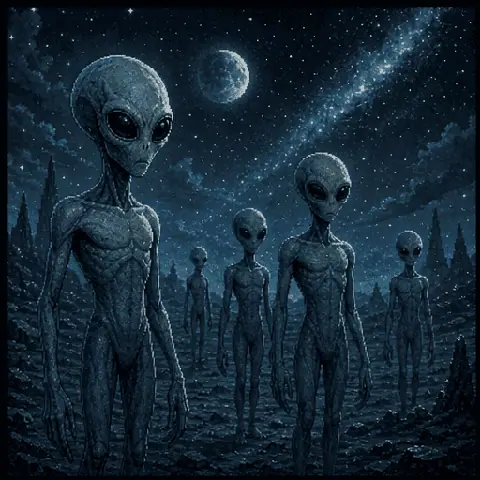
- Grey aliens are clinical, quiet, and strongly linked to abduction.
- Nordic aliens are human-like, beautiful, and usually benevolent.
- Arcturians belong more to healing, starseed, and higher-consciousness beliefs.
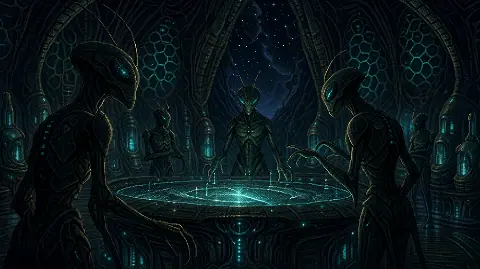
- Insectoid aliens feel radically non-human and often appear in stranger encounter reports.
- Machine elves sit closer to psychedelic and consciousness experiences.
Reptilians carry a different function. They are the alien as predator, ruler, infiltrator, or ancient rival intelligence.
The intensity comes from that role: Reptilians are not just strange visitors, but alleged hidden actors inside the human world.
Are Reptilians Extraterrestrial, Interdimensional, Or Earth-Based?
Reptilian lore offers several origin stories.
Some versions say they come from star systems such as Draco or Orion. Others describe them as interdimensional beings able to move between layers of reality. Another strand imagines them as an ancient Earth species that survived underground or behind the surface of history.
Each origin changes the meaning of the story.
An extraterrestrial Reptilian is a visitor. An interdimensional Reptilian is a being from another layer of reality. An Earth-based Reptilian is a hidden neighbor or rival species.
Those differences should not be collapsed into one claim. The word "Reptilian" is doing too much work across too many belief systems.
Why People Believe In Reptilian Aliens
Belief in Reptilians is not only about evidence. It is also about pattern, intuition, distrust, and the feeling that visible power is not the whole story.
People are drawn to the Reptilian idea because it explains several anxieties at once:
- why leaders seem detached from ordinary human suffering
- why institutions feel opaque or controlled
- why media narratives feel coordinated
- why ancient serpent imagery appears across cultures
- why some encounter reports describe reptile-like beings
- why power can feel cold, predatory, and non-human
The belief gives those anxieties a single shape.
The single-shape explanation can be compelling. It can also become dangerous when metaphor, entity claims, and political suspicion collapse into one accusation.
Alternate Explanations And Cautions
Some Reptilian claims may be better explained through symbolism, misinterpretation, folklore, altered states, media influence, or conspiracy thinking.
Video-based shapeshifting claims are especially weak. Compression artifacts, lighting changes, eye reflections, makeup, editing, and low-resolution footage can make faces look strange for reasons that have nothing to do with non-human disguise.
The strongest version of the topic is not "this celebrity's eyes glitched in a video."
The stronger questions are older and more interesting: why reptile-human beings appear so often in myth, why some encounter reports describe reptilian entities, and why modern people keep translating fear of hidden power into non-human form.
Why Reptilians Remain The Alien Image Of Hidden Power
Reptilian aliens endure because they give hidden power a body.
Greys turn the alien into a silent examiner. Nordics turn the alien into a beautiful guide. Arcturians turn the alien into a spiritual teacher. Reptilians turn the alien into the thing behind the curtain.
The idea is resilient because it fits a suspicion many people already carry: the official world is not the whole world, and visible authority may answer to something deeper.
Whether readers interpret that as literal non-human control, symbolic mythology, or a distorted conspiracy frame, Reptilians remain one of the most potent figures in modern alien lore.
Explore the Reptilian Green and Reptilian Brown NFT models in the Other Worlders pixel collection.
FAQs
Are Reptilian aliens real?
Many believers and experiencers treat Reptilians as real non-human beings. Others read them as myth, symbolism, or conspiracy culture. Otherworlders takes the topic seriously while separating encounter lore from unsupported claims about real-world groups.
Who popularized Reptilian conspiracy theory?
David Icke is the most widely known modern figure associated with shapeshifting Reptilian conspiracy claims.
Are Reptilians part of UFO lore or conspiracy culture?
Both. Reptilians appear in alien-entity lore, ancient-mystery speculation, and paranormal accounts, but their strongest modern presence is in conspiracy culture.
What do Reptilian aliens look like?
They are usually described as humanoid beings with reptile-like traits: scales, slit eyes, clawed hands, ridged faces, or lizard-like skin.
Are Reptilians connected to ancient serpent myths?
Some writers connect them to serpent and dragon beings from older mythologies. Those parallels are interesting, but they do not prove all serpent myths describe the same entity.
Why is Reptilian lore controversial?
It can overlap with harmful conspiracy narratives about hidden elites, bloodlines, and secret control. The topic needs careful handling so alien lore does not become coded blame aimed at real communities.