Explore the Evidence
1. Why Is Taposiris Magna a Candidate for Cleopatra's Tomb?
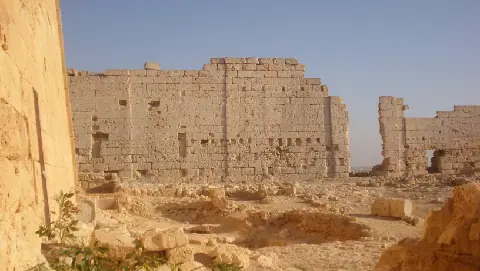
Martínez began her search at Taposiris Magna in 2005. Egypt's State Information Service places the site about 45 kilometres west of Alexandria and describes it as a religious and commercial centre during the Ptolemaic and Roman periods. Its name means “the great tomb of Osiris”. The government's August 2026 account describes tunnels, burial grounds and submerged remains.
Cleopatra's connection with Isis gives the temple a place in Martínez's theory. Isis and Osiris were a divine couple associated with kingship and the afterlife. Martínez proposes that Cleopatra chose a religious setting where she and Antony could be buried together, away from Roman interference. National Geographic's expedition account explains her reasoning.
Think of the temple as a candidate address. Its religious associations make the address plausible. The discoveries let researchers investigate who used it, when and for what purpose.
The name alone cannot identify the people buried there. “Tomb of Osiris” is a religious designation, and many people were buried around the complex. What makes this candidate interesting is the combination of architecture, burial grounds, objects from Cleopatra's period and access to the coast.
A foundation plate is especially revealing. An inscription can preserve who commissioned a building and the deity it honoured, rather like a ceremonial stone set into a modern civic building. The foundation plates appear in the official expedition footage below.
That is the starting case for Taposiris Magna. The discoveries become easier to assess once we put them in their original sequence.
2. What Are the Latest Clues to Cleopatra's Tomb?
The tunnel, the coin discoveries and the port announcement belong to different years. The latest official activity report reviewed here is from August 2026.
| Date | Discovery or Development | What It Adds to the Search |
|---|---|---|
| November 2022 | An approximately 1,305-metre tunnel beneath the temple | A major underground feature leading towards the coast |
| December 2024 | Foundation deposits, 337 coins including examples depicting Cleopatra, a female bust and other objects | Evidence for the temple's use during the late Ptolemaic period |
| September 2025 | Announcement of a submerged ancient port off Taposiris Magna | A larger coastal landscape for researchers to explore |
| August 2026 | Ministerial inspection of the Egyptian-Dominican mission | Confirmation of continuing work, including excavation, scientific study and restoration |
The tunnel figures come from the contemporary November 2022 report of the ministry's announcement. UNPHU's December 2024 news report describes the artefacts and includes photographs supplied by Martínez.
National Geographic announced the port on 18 September 2025. The government inspection took place on 20 August 2026. It covered the current season's restoration and consolidation of temple gates and walls, alongside the mission's wider archaeological work.
These dates describe when findings became public. A documentary clip uploaded later can show earlier fieldwork. The port footage below was released in November 2025; that does not make November the date of discovery.
The story has advanced from a temple excavation to a coastal investigation. The tunnel is the feature that connects those two settings.
3. Could the Tunnel Lead Towards a Royal Burial?
The tunnel extends for about 1.3 kilometres beneath the temple. The 2022 announcement described parts of it as submerged, and Martínez suggested it probably supplied water. Its scale makes it a substantial piece of engineering, whether or not it ultimately has a connection to Cleopatra.
A buried passage is like a road on an incomplete map. You can measure where it runs without yet knowing every place it served. Researchers need to understand its construction, original function and relationship to the temple and shoreline.
Martínez sees the tunnel as a possible route within the burial landscape. National Geographic reports her proposal that Cleopatra's body could have been brought to Taposiris Magna and moved through it. That is a proposed last journey, rather than an excavated trail of funerary transport.
The offshore discoveries give that route a destination worth examining. Divers found stone structures, columns, anchors and amphorae, the jars used to transport goods. The Egyptian government's port announcement describes the harbour investigation. National Geographic's account names one group of structures Salam 5 and another the Three Sisters.
A port would mean the temple complex had access to a maritime network. It could help explain how people and goods reached the site and how the landscape extended beyond the ruins visible today.
A route capable of carrying a coffin would also carry ordinary cargo. Researchers must establish which function a particular passage or chamber served through its layout, associated objects and excavation context.
The port makes the proposed journey physically more interesting. The objects inside the temple help establish the period in which that landscape was used.
4. What Do the Coins and the Bust Tell Us?
The 2024 discoveries include 337 coins, with examples depicting Cleopatra VII. UNPHU's report also lists ceremonial pottery, lamps, bronze statuettes, a cosmetic container and a ring associated with Hathor. Foundation deposits are ceremonial objects buried as part of a building's dedication. Like a time capsule placed inside a foundation, they connect objects with a particular stage of construction. The deposits here were found beneath the enclosure wall.
These are valuable finds in their own right. They help researchers reconstruct activity around a religious complex during the late Ptolemaic period.
A coin with Cleopatra's portrait is like a banknote carrying a monarch's face. Finding it gives you information about the currency in use. It does not establish that the monarch personally visited the spot, or was buried there.
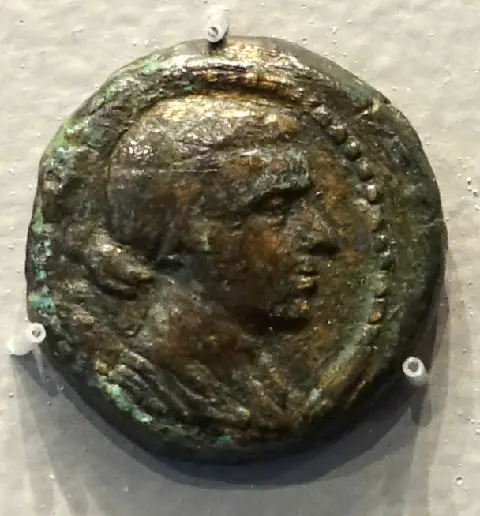

The female marble bust raises a different question. Martínez has suggested it could depict Cleopatra. The university's report records disagreement over that identification, with other archaeologists interpreting it as another royal woman.
Portrait identification depends on more than a face that looks familiar. Excavation context, inscriptions and comparisons with securely identified representations can all strengthen an attribution.
The distinction is easy to see with the coin. Its image belongs to an identified issue. A sculpture without a surviving name needs another path to its identity.
The finds place the temple within Cleopatra's world and make the excavation worth following. To connect that world with her burial, researchers must also address the evidence pointing back to Alexandria.
5. Where Is Cleopatra Buried? Two Locations Drive the Search
The two principal cases considered here are Taposiris Magna and Alexandria's royal quarter. Both have real archaeology behind them, but they begin with different kinds of evidence.
1. Taposiris Magna Begins With a Temple and a Possible Route
Martínez's case combines an Isis-linked temple, a substantial burial landscape, objects from Cleopatra's period and a tunnel directed towards the sea. The underwater structures extend the area that can be investigated.
The temple's religious character supplies a motive within her theory. Cleopatra's identification with Isis could make a sanctuary an appropriate setting for her final resting place alongside Antony. A maritime connection supplies a possible means of reaching it.
The strongest feature of this case is that it produces places to examine. A buried chamber, foundation deposit or underwater structure can be recorded and excavated. Each discovery can refine the next search area.
Its unresolved step is the proposed movement of the bodies. Evidence of a functioning temple and harbour cannot, by itself, show that Cleopatra and Antony were taken there after their deaths.
That connection could come from a secure royal burial context or inscriptions relating to the occupants. A record of transport or reburial would also alter the historical case. Those are examples of the evidence needed, rather than findings the mission has announced.
The attraction of Taposiris Magna is the way new physical discoveries keep opening the landscape. The next question is whether any of those places preserves evidence specifically tied to the couple.
2. Alexandria Begins With the Ancient Burial Accounts
Plutarch's account says Octavian ordered Cleopatra to be buried with Antony in royal splendour. Cassius Dio describes her tomb under construction in the royal grounds and records their burial together. These texts provide the basis for searching around the royal city. Plutarch's Life of Antony and Dio's Roman History, Book 51 preserve the accounts.
Picture those writings as directions left by people describing an older city. They identify a setting, but they do not give today's diver a surviving street address.
Underwater archaeologist Franck Goddio and the European Institute for Underwater Archaeology have investigated Alexandria's submerged ancient harbour. Their work has mapped parts of the royal landscape, including the island of Antirhodos and the Poseidium peninsula. The project's Alexandria account describes the excavations.
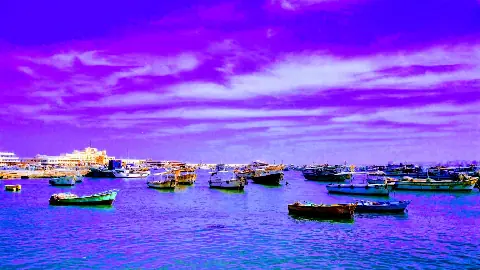

Goddio's team reports evidence of an Isis temple on Antirhodos associated with Cleopatra's personal cult. The association with Isis therefore supports the wider historical context of both candidate areas; it does not uniquely select the western temple.
Alexandria's advantage is the relationship between the ancient narrative and the royal setting. Its difficulty is locating and identifying a particular tomb within a landscape altered and partly submerged over time.
The two cases deserve to be tested against the same question. Where can the archaeology connect a location with an identifiable burial? Our look at Egypt's submerged cities and structures explores how much of that ancient coastal world remains beneath the sea.
6. The Burial Trail Connects a Place With a Person
The Burial Trail is the chain of evidence connecting a candidate location, a plausible burial route, a funerary setting and an identifiable person.
Imagine finding an old luggage label, a railway platform and a suitcase. Together, they could describe a journey. Establishing whose suitcase it was requires something that ties those clues to its owner.
Cleopatra's tomb faces the same problem at a much larger scale. A temple can establish a relevant setting. A tunnel can offer a possible route. A burial chamber can establish funerary use. Identifying the occupant is a further step.

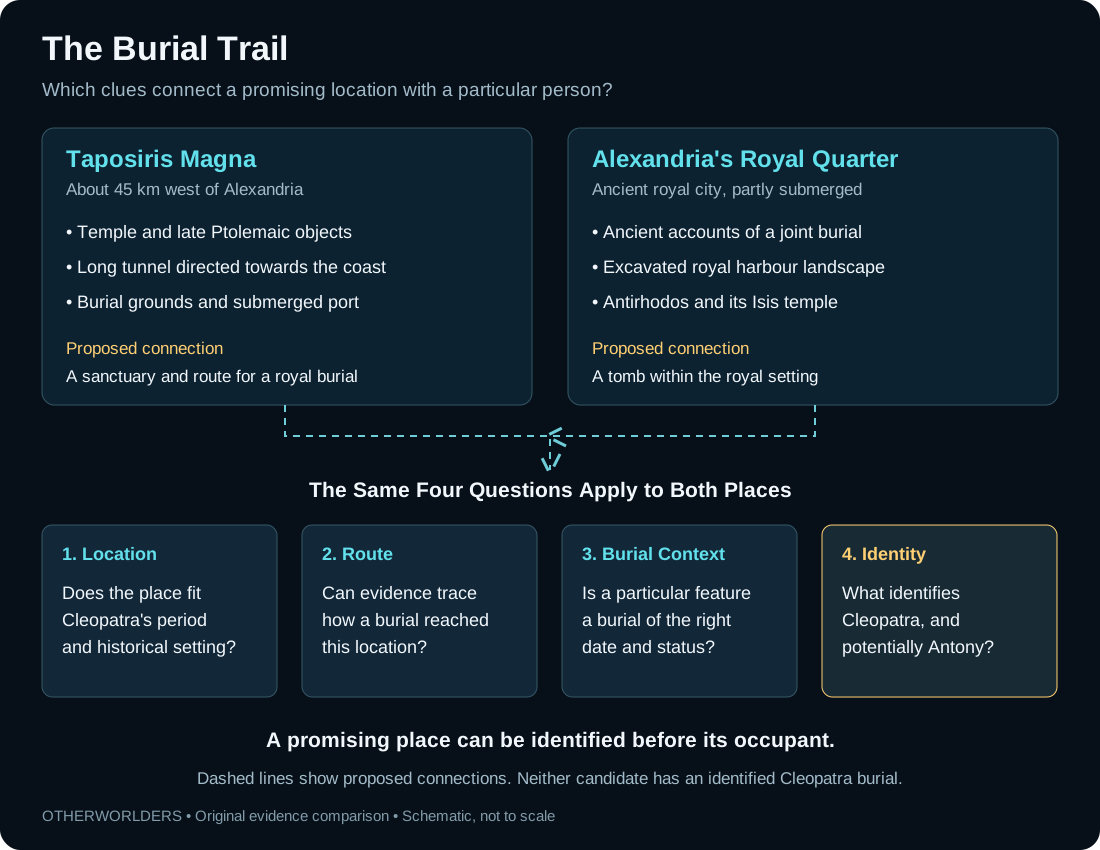
If you are asking has Cleopatra's tomb been found, this is the distinction to keep in view. The discoveries have strengthened the investigation of a candidate site. The reports reviewed here have not identified her tomb or remains.
I find the coastal connection the most compelling part of the Taposiris story. It gives the tunnel a wider setting to investigate. I would watch for evidence that connects a particular chamber or structure with a burial, then connects that burial with Cleopatra.
The search for Huni's lost pyramid raises a related problem. Finding an ancient structure and attributing it to a particular ruler require different evidence.
The Burial Trail gives the next discovery a specific job. It needs to connect one of these places more closely with the person being sought.
7. What Would Justify a “Cleopatra Tomb Found” Announcement?
An inscription naming Cleopatra in a secure burial context would be a substantial advance. A group of royal burial objects recovered together, securely documented and dated, could also narrow the identification. Identifying the tomb of Antony and Cleopatra would require evidence connecting the burial with both people. No single test works independently of where and how the evidence was recovered.
Three kinds of evidence would bring the search closer to an answer.
- A documented burial context. Researchers would need to establish that a chamber or deposit served a funerary purpose and record its relationship to the surrounding structures.
- Evidence of date and status. Objects, inscriptions and scientific analyses could test whether the burial fits the right period and a royal occupant.
- Evidence of identity. A name or a convincing combination of independent findings would need to connect the burial specifically with Cleopatra, and potentially Antony.
A date is like the year on a building's foundation stone. It can place something in time without naming everyone who later used it. Dating a burial to Cleopatra's period would be useful, but many people lived and died during her reign.
Human remains, if found, would require their own careful identification. A DNA result would need suitable comparative evidence and authentication; it would not automatically produce a name.
When someone asks did they find Cleopatra's tomb, the answer should connect to these findings rather than the upload date of a dramatic video. The latest official report confirms continuing work at Taposiris Magna. It supplies no timetable for identifying a royal burial.
There is plenty to watch without inventing a deadline. A fuller account of the tunnel's function, excavation around the underwater structures or an inscribed funerary object could each move the investigation forward.
The search has already revealed a larger and more complex ancient landscape. Somewhere within that landscape may be the next clue to Cleopatra's last journey.
Frequently Asked Questions
Has Cleopatra's Tomb Been Found?
Researchers have found tunnels, artefacts, burials and a submerged port at Taposiris Magna. The reports reviewed here have not identified Cleopatra's tomb or remains.
Where Is Cleopatra Buried?
The location remains unresolved. Ancient accounts place her burial with Mark Antony in the Alexandrian royal setting. Kathleen Martínez is investigating the alternative that they were buried at Taposiris Magna, west of Alexandria.
What Was Found at Taposiris Magna?
Reported discoveries include a long tunnel, foundation deposits, coins depicting Cleopatra, sculptures, burial grounds and submerged structures interpreted as an ancient port. They document the site's importance, while its connection with Cleopatra's burial remains under investigation.
Does the Tunnel Lead to Cleopatra's Tomb?
The tunnel extends towards the coast, where the team has investigated submerged structures. Its connection with a royal burial is a proposed interpretation. An identified tomb at its end has not been reported.
Is the Marble Bust Definitely Cleopatra?
Its identification is disputed. Martínez has proposed Cleopatra, while UNPHU's report records other archaeologists interpreting it as a different royal woman.
Is the Search Still Active in 2026?
Yes. Egypt's State Information Service recorded an inspection of the Egyptian-Dominican mission on 20 August 2026, describing continuing archaeological work and restoration at Taposiris Magna.