What Happened On January 7, 1948
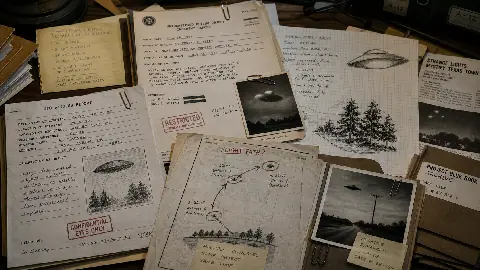
Reports of a large object over Kentucky reached Godman Field near Fort Knox during the afternoon of January 7, 1948. The object was described from the ground as bright, large, and difficult to identify. Military personnel asked pilots in the area to investigate.
Captain Thomas F. Mantell, flying an F-51 Mustang with the Kentucky Air National Guard, joined the pursuit. He climbed after the reported object while the case moved quickly from a strange sighting into an active aviation incident.
The Pursuit From Godman Field
The chase is the centre of the Mantell case. Witnesses on the ground were trying to identify an object. Pilots were being directed toward it. Mantell continued the climb, and the event unfolded in real time through aviation decisions rather than later legend alone.
That is why altitude, aircraft performance, oxygen equipment, weather, and sightline geometry matter so much in this case. Any serious account has to treat Mantell first as a pilot in a dangerous climb, not just as a character in a UFO story.
The Crash Near Franklin
Mantell's aircraft crashed near Franklin, Kentucky. He was killed in the accident. The crash changed the case immediately because it attached a human loss to a reported unknown object and forced the incident into official aviation and Air Force records.
Later retellings often focus on what Mantell was chasing, but the crash itself is the harder fact at the centre of the story. A National Guard pilot died, the military had to explain what happened, and the case became one of the first fatal episodes linked to the modern UFO era.
What Investigators Considered
The Mantell file entered the early U.S. Air Force UFO investigation system, including the Project Sign and Project Blue Book era. NICAP's Mantell directory points readers toward Project Blue Book documents, witness statements, accident-report material, press clippings, and later analysis.
Explanations have included Venus and high-altitude balloon interpretations. The source trail is valuable because it shows how those explanations were weighed against witness reports and crash details. It does not turn every later claim into fact, and it does not make the case simple.
Why The Case Still Matters
The Mantell UFO incident remains important because it joins a reported unknown object with a fatal aircraft crash and an official investigation trail. It is not a clean proof text for any single theory. It is a case where aviation risk, public attention, and early UFO investigation collided.
For comparison with other documented cases, Mantell is also listed on the UFO Sightings Map as a crash-area anchor near Franklin, Kentucky.
Mantell also connects naturally to Project Sign, the UFO timeline, and later aviation cases in the archive.