Start Here: The 1954 Sea Fury Radar Case
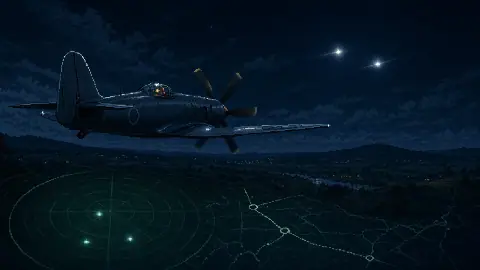
The first investigation returns to a night flight over southern New South Wales. Lieutenant J. A. O'Farrell reported two bright lights making fast passes near his Royal Australian Navy Sea Fury. At Nowra, Petty Officer K. E. Jessop reported two radar returns followed by a third.
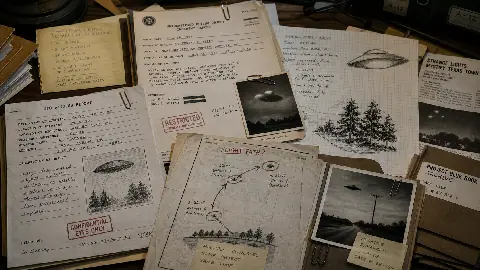
The original file preserves both statements, a rare combination of visual testimony and sensor reporting. It also preserves the weaknesses that later retellings tend to remove.
Read the Sea Fury UFO incident →
Australian Files Available Now

1966 · QUEENSLAND
Tully Saucer Nest UFO Incident
What the original report, police inspection and RAAF waterspout assessment actually preserve.
1954 · NSW
Sea Fury UFO Incident
Two lights seen by a naval pilot, three radar returns and a case that remains unresolved in the accessible file.
1954 · SOUTH AUSTRALIA
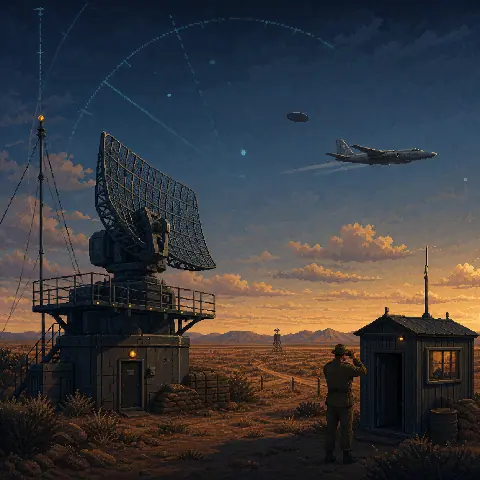
Woomera UFO Incident
The original witness reports, the surviving radar plot and a new check of the famous 3,600 mph claim.
1957 · TASMANIA
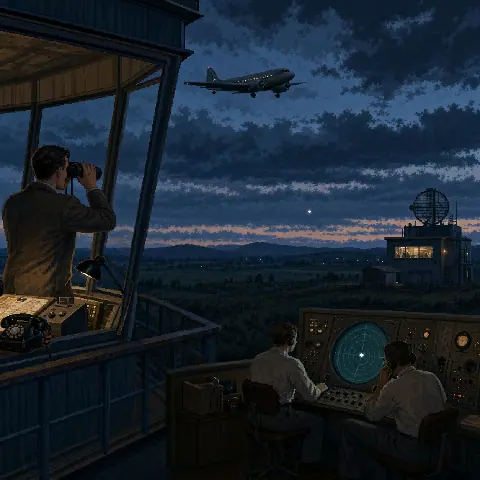
Launceston-Hobart UFO Incident
A three-minute tower sighting, a later 15-second radar return and the gaps preserved in four official reports.
1968 · NSW
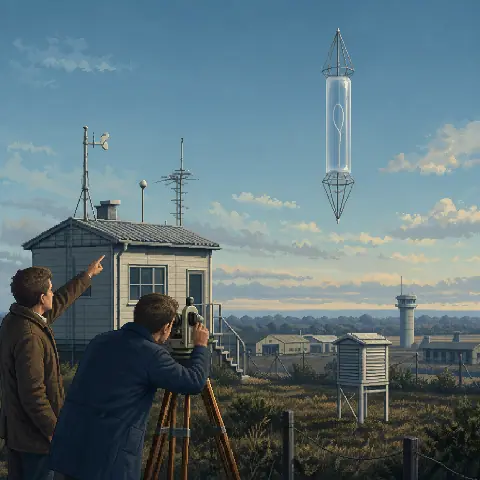
Williamtown UFO Incident
Reported Sydney radar tracking, four theodolite readings and an object moving almost exactly with the upper-level wind.
1957–1971 · DEFENCE
The “Cat-Faced” Beings File
Why strange foreign encounter stories appeared in an authentic Australian intelligence record—and what that does not prove.

1966 · VICTORIA
The Westall Encounter
Australia's best-known school sighting and the difficult boundary between witness history and surviving government evidence.
1971 · INTELLIGENCE
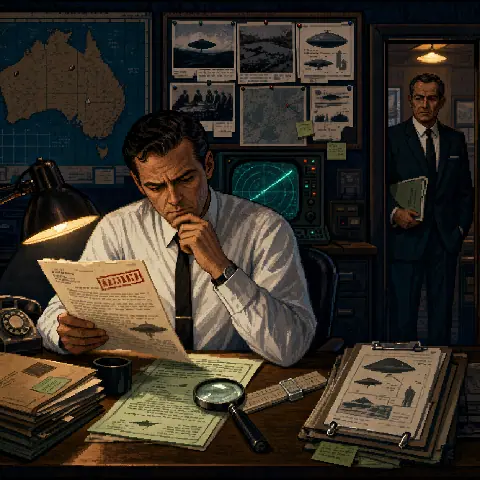
The Turner Paper
What Australia's famous UFO intelligence memo argued, where its evidence ran out and what officials actually proposed.
1978 · BASS STRAIT
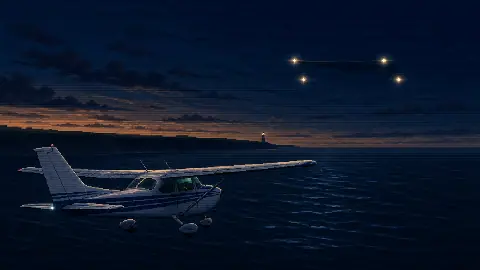
Frederick Valentich Disappearance
The final radio report, the search, a tested oil slick and a Cessna part that never settled the case.
What Australian UFO Records Exist?
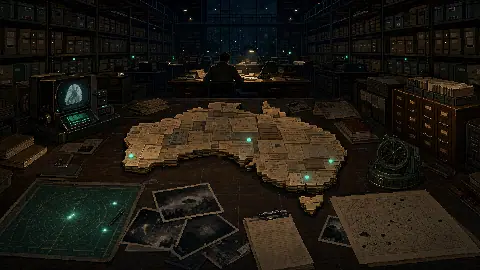
The best-known holdings sit in several National Archives series rather than one master “UFO file.” The Department of Air and Royal Australian Air Force collected reports from defence personnel, pilots, air traffic controllers, meteorologists and members of the public. Navy, Civil Aviation, intelligence and regional offices also created their own records.
Major groups include the long-running A703 sighting and policy files, Navy case folders such as the Sea Fury record, records from the Woomera weapons-testing area, Joint Intelligence Organisation papers, regional Air Force files and the extensive Civil Aviation investigation into Frederick Valentich's 1978 disappearance.
That fragmented structure is why this series uses the archive's series number, control symbol and item barcode wherever possible. A headline can change. Those identifiers lead back to the record.
Are These Australian “FOIA Files”?
“FOIA files” is common shorthand online, but Australia calls the process freedom of information, or FOI. Current agency documents can be requested under the Freedom of Information Act 1982.
Many historic UFO files in this series are accessible for a different reason. Commonwealth archival records enter the open access period under the Archives Act 1983, after which the National Archives assesses them for public release. A file can therefore be publicly available without having been released in response to an FOI request.
This distinction matters. “Released under FOI,” “declassified” and “open in the National Archives” describe different routes to access. None is a verdict on the truth of every claim inside a document.
How We Read The Files
Those labels are not interchangeable. An authentic Defence file can contain an unverified newspaper clipping. A sincere witness can misidentify an object. An official can offer an opinion without conducting a full investigation. An unresolved report can remain interesting without becoming evidence of extraterrestrial craft.
For each case, we favour documents created closest to the event, identify later retellings, disclose missing evidence and show readers where to inspect the scans themselves.
What The Series Will Investigate Next
- Why official reporting stopped: the RAAF's 1994 decision and what happened to Australian UFO reporting after it left the Air Force.
This roadmap may change as stronger files surface. The editorial priority is not fame; it is the combination of original evidence, historical importance and a question the surviving record can genuinely illuminate.
Where To Find The Original Records
- National Archives of Australia RecordSearch — search by series, control symbol, item title or barcode.
- National Archives overview of Australian UFO records — a useful introduction to the Sea Fury and Valentich files.
- Other Worlders UFO Investigations — the wider international archive of official programs, inquiries and public records.
Frequently Asked Questions
Did The Australian Government Investigate UFOs?
Yes, although there was no permanent Australian equivalent of Project Blue Book. The Department of Air and RAAF collected and assessed reports, while other departments created records when incidents touched their responsibilities.
Are Australian UFO Files Available Online?
Many are digitised in the National Archives of Australia's RecordSearch system. Others are listed but may require an access request or paid digitisation before their pages can be read online.
Do The Files Prove Extraterrestrial Visitors?
No. They prove that people made reports and that officials recorded, discussed or sometimes investigated them. Some cases remain unresolved in the accessible paperwork, which is not the same as establishing an extraterrestrial cause.