What Happened In Varginha?
On the afternoon of 20 January 1996, three young women reported seeing a strange being in a vacant lot near a wall in Varginha, a city in the south of Minas Gerais, Brazil. Later accounts describe the figure as small or short, crouched, apparently unsteady, with a large head, red eyes, brown or oily-looking skin, and three bumps or horn-like features on its head.
The witnesses ran home and told their mother they had seen something frightening. That first report already had the ingredients of an entity case: a specific location, named witnesses, a clear description, fear, rain, and a figure that did not behave like an ordinary passerby.
The wider Varginha story grew after that. Rumours connected the sighting to firefighters, army vehicles, a hospital, alleged zoo animal deaths, and the death of military police officer Marco Eli Chereze. Those claims turned a local encounter report into a crash-retrieval narrative with Brazil's army placed at the centre of the mystery.
Quick Timeline Of The 1996 Case
| Stage | What The Source Trail Describes |
|---|---|
| 20 Jan 1996, afternoon | Three young women reported seeing a crouched, red-eyed figure near a vacant lot wall in Varginha. |
| Same period | Local rumours later linked the city to firefighters, military vehicles, strange animal deaths, and claims of other beings. |
| Following weeks | Ufologists interviewed witnesses and began framing the figure as extraterrestrial rather than human, animal, or folklore. |
| 1996 | Vitório Pacaccini and Maxs Portes published Incidente em Varginha, making military-capture claims central to the case. |
| 1997 | The army inquiry, IPM n. 18/1997, examined claims that military personnel captured and transported an alleged extraterrestrial. |
| 2025-2026 | Globo's documentary series, Guardian and El País coverage, and STM archive access pushed the case back into public debate around the 30th anniversary. |
The sequence keeps the Varginha Incident from collapsing into one continuous military recovery story. The record is messier. A vivid creature sighting came first. The army-and-hospital story grew through later testimony, media attention, books, documentary claims, and official denial.
What The Three Witnesses Reported
The strongest part of the case is the afternoon witness report. The three young women were not describing a distant light, a dream, or a shape high in the sky. They placed the figure on the ground, close enough to describe posture, head shape, eyes, skin, and movement.
El País reports that the witnesses described a being with a heart-shaped face, large red eyes, three small horn-like bumps on the forehead, and a shiny brownish body. The Guardian's 30-year anniversary reporting also describes the creature as malodorous and crouched beside a wall.
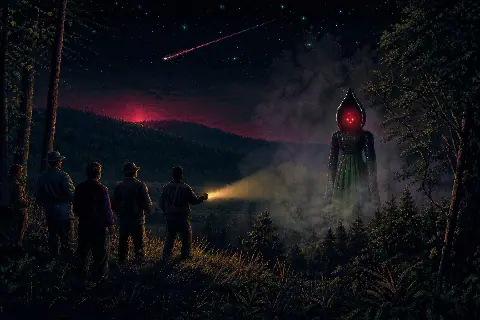
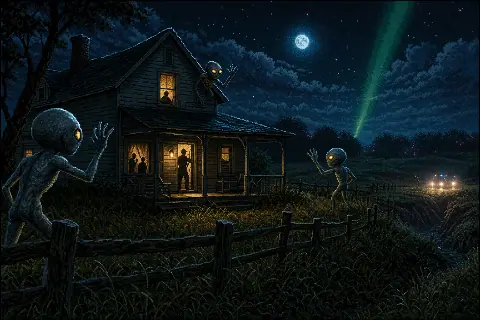
Those details make the case hard to file as a routine UFO sighting. Varginha belongs closer to the entity-report tradition represented by the Flatwoods Monster and the Kelly-Hopkinsville Encounter. The evidence rests less on instruments or photos and more on witness reaction, source custody, and the later pressure created by folklore.
The Capture Story And Hospital Claims
The capture story is the part that made Varginha internationally famous. In later versions, more than one being was allegedly recovered, moved by firefighters or military personnel, taken to medical facilities, and eventually hidden from public view. Some accounts connect the case to the Regional Hospital in Varginha, the Humanitas hospital, the Army Sergeants' School in Três Corações, and later transport to Campinas.
That layer is also where the evidence thins. Much of it depends on anonymous soldiers, delayed testimony, documentary interviews, or claims repeated through ufology books and television. The story of Marco Eli Chereze's death is especially sensitive. It is a real death wrapped in a disputed claim that he handled a creature and later died from infection. Public reporting has not produced a clean document trail proving that connection.
The hospital claims became more prominent again around the 30th anniversary. El País and the Guardian both covered new documentary testimony from neurologist Ítalo Venturelli, who says he saw a strange being in hospital in 1996. That testimony is important to the modern story, but it arrived decades after the event and has to be weighed separately from the original three-witness report.
What The Army Inquiry Said
The official archive anchor is Inquérito Policial Militar n. 18/1997, held by Brazil's Superior Military Court in the ARQUIMEDES archive. The archive record describes two paper volumes, 357 folios, produced from 13 February to 19 June 1997.
The inquiry was generated through the Army Sergeants' School in Três Corações after military personnel were named in the 1996 book Incidente em Varginha as supposedly responsible for capturing and transporting an extraterrestrial being in Varginha on 20 January 1996.
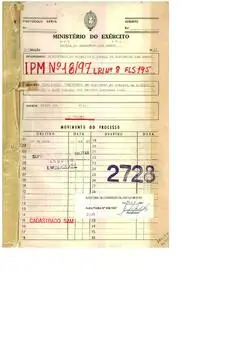
El País reports that the army inquiry concluded the story was fictitious and that the named military personnel had not taken part in an operation transporting any unusual cargo. The Guardian reports the same broad conclusion and says the report framed ordinary events, including rain, vehicle movements, and local rumours, as having been linked into an alien narrative.
The Mudinho Explanation
The army's best-known explanation is the Mudinho theory. Luís Antônio de Paula, known locally as Mudinho, was a Varginha resident with disabilities who was said to move through the city in a crouched posture. The official account proposes that, during a heavy storm, the three witnesses may have misidentified him as a strange creature.
That explanation has a straightforward mechanism. It gives the case a human figure, a storm, a crouched posture, darkness or poor visibility, and fear. It also avoids the need for a secret military retrieval, hospital transfer, or physical evidence that has never surfaced in public.
The witnesses reject it. El País reports that Valquiria Silva said they knew Mudinho from childhood and insisted the figure was not him. That rejection keeps the original sighting alive even if the military-capture narrative is weaker than believers usually admit.
How Varginha Became Brazil's Roswell
Varginha survived because it did not stay inside one witness statement. It became a city identity, a tourism hook, a documentary subject, a political archive issue, and a shorthand for Brazilian UFO culture.
The city has leaned into the alien image through statues, themed bus stops, a water tower styled like a saucer, and the ET Museum. The Guardian reported in 2026 that Varginha officials described major visitor interest at the museum and plans to build a monument at the wasteland associated with the three-witness sighting.
That cultural afterlife cuts both ways. It keeps the case visible, but it also adds incentives, retellings, souvenirs, TV segments, paid interviews, and identity politics around the story. By the time a case becomes a city's brand, the original event is harder to isolate.
Evidence Limits
The limits are blunt. There is no public body, no verified biological sample, no released hospital record proving a non-human patient, no public chain-of-custody for a captured entity, and no official photograph of the alleged being. The most inspectable official file is an army inquiry that rejects the capture story.
The strongest pro-Varginha material is human testimony. The three-witness sighting remains vivid. Some later witnesses and doctors continue to claim something extraordinary happened. Ufologists such as Pacaccini still argue for a military operation. Those claims explain why the case keeps returning, but they do not replace hard evidence.
The case is not in the same evidence category as instrument-backed files such as radar-visual encounters or official video releases. It belongs in the high-strangeness and entity-report lane, with a stronger cultural record than physical proof. For Brazil's official UFO context, Operation Saucer remains the cleaner military-documentation comparison.
What Remains Unresolved
The unresolved core is the gap between the witnesses' certainty and the official explanation. Three young women said they saw a figure they did not recognise as a local man. The army inquiry says the story grew from misinterpretation and rumour. The city says, in effect, that the legend is now part of Varginha whether the file is closed or not.
That leaves Varginha in a strange position. It is not one of the best documented UFO cases if documentation means independent physical evidence or instrument records. It is one of the most durable modern alien-entity cases if documentation means named witnesses, a dated official inquiry, media layers, and a city still negotiating the story 30 years later.
There is also a related Varginha NFT model in the Other Worlders collection.
Source Trail
- Superior Military Court ARQUIMEDES: Inquérito Policial Militar n. 18/1997
- El País English: The 'ET of Varginha' captivates Brazil 30 years after sighting
- The Guardian: Brazil's UFO capital marks 30 years since alien encounter
- Globoplay: O Mistério de Varginha documentary series
- Skeptoid: Brazil's Roswell, The Varginha UFO